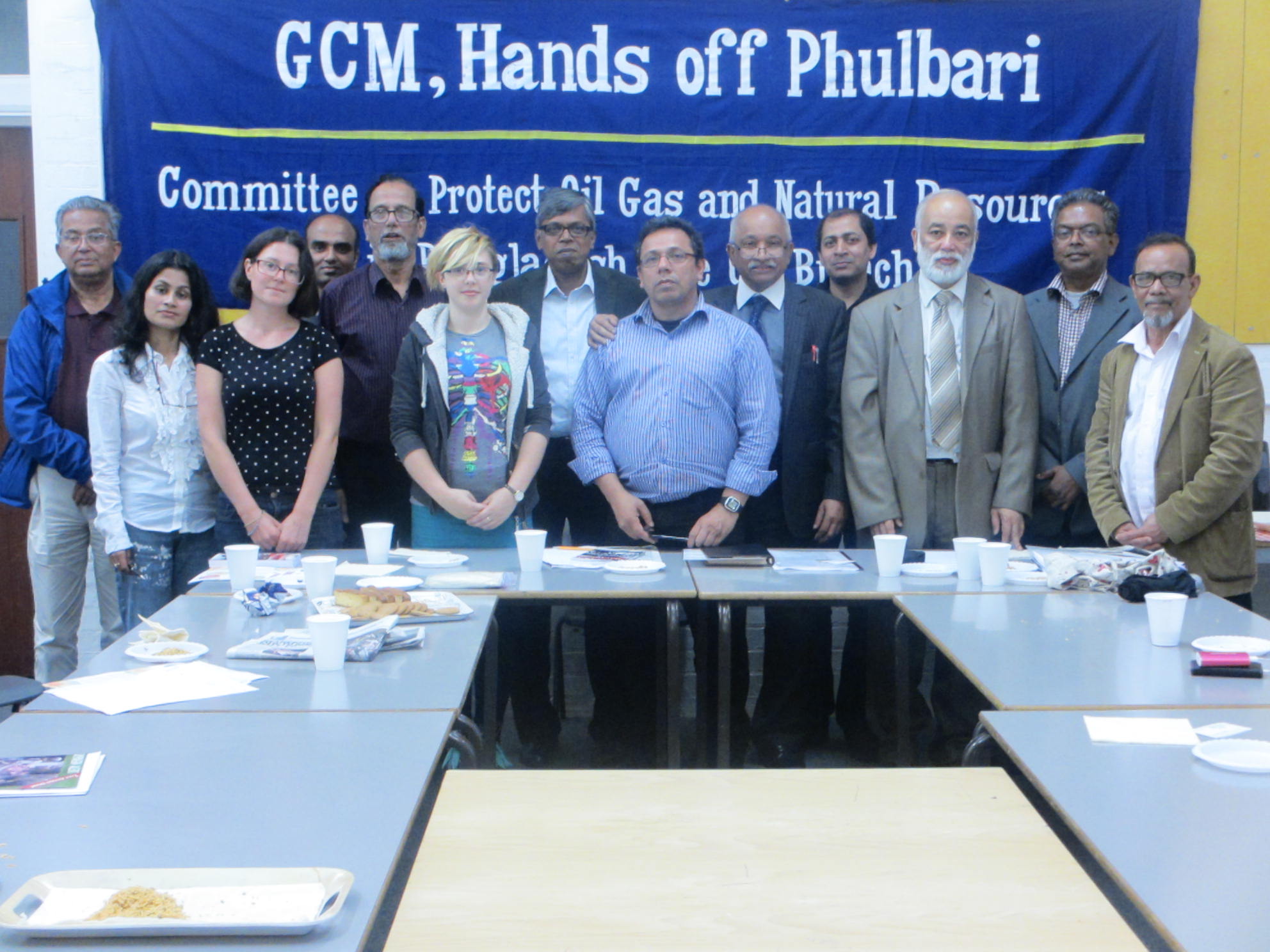
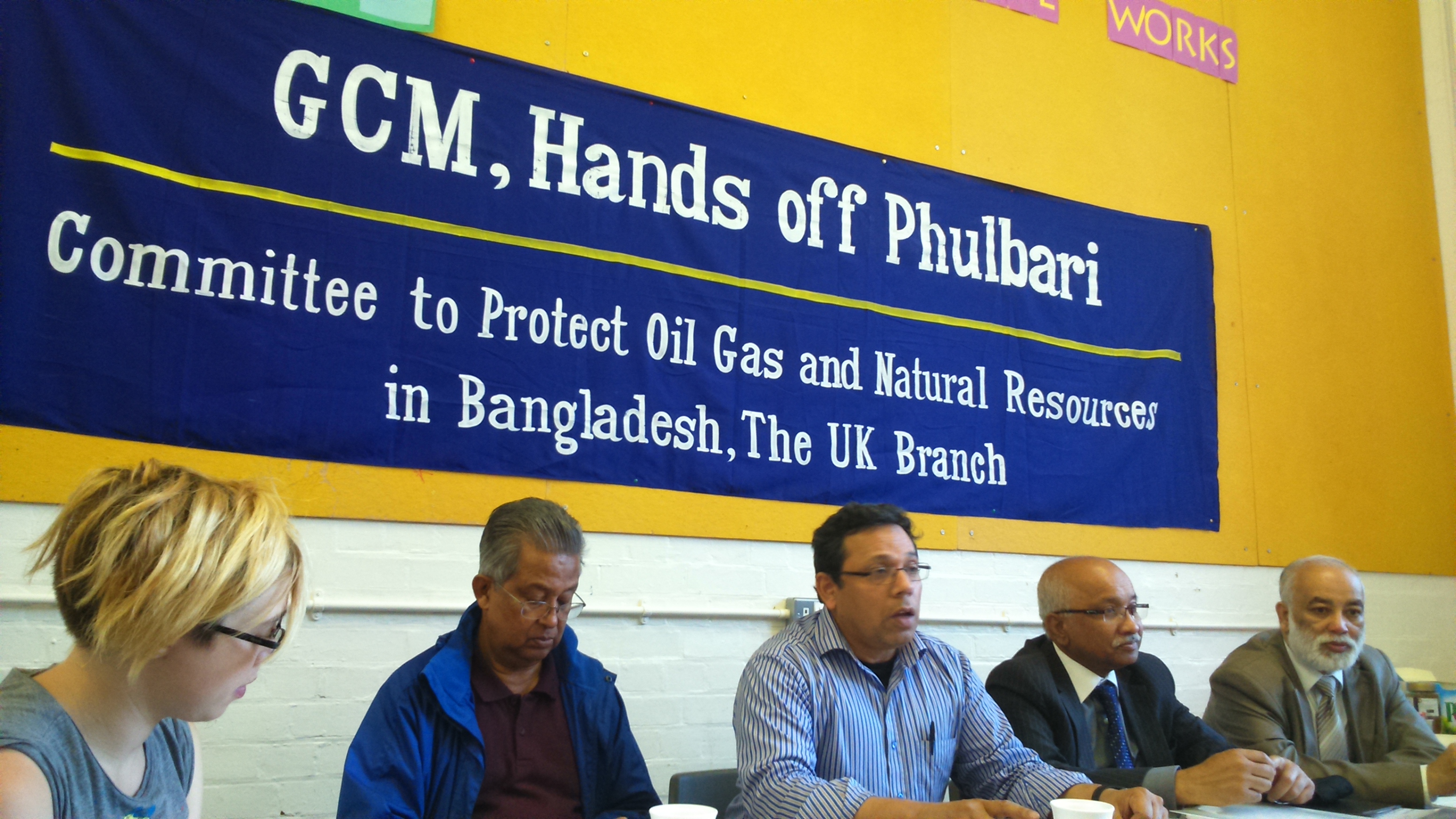
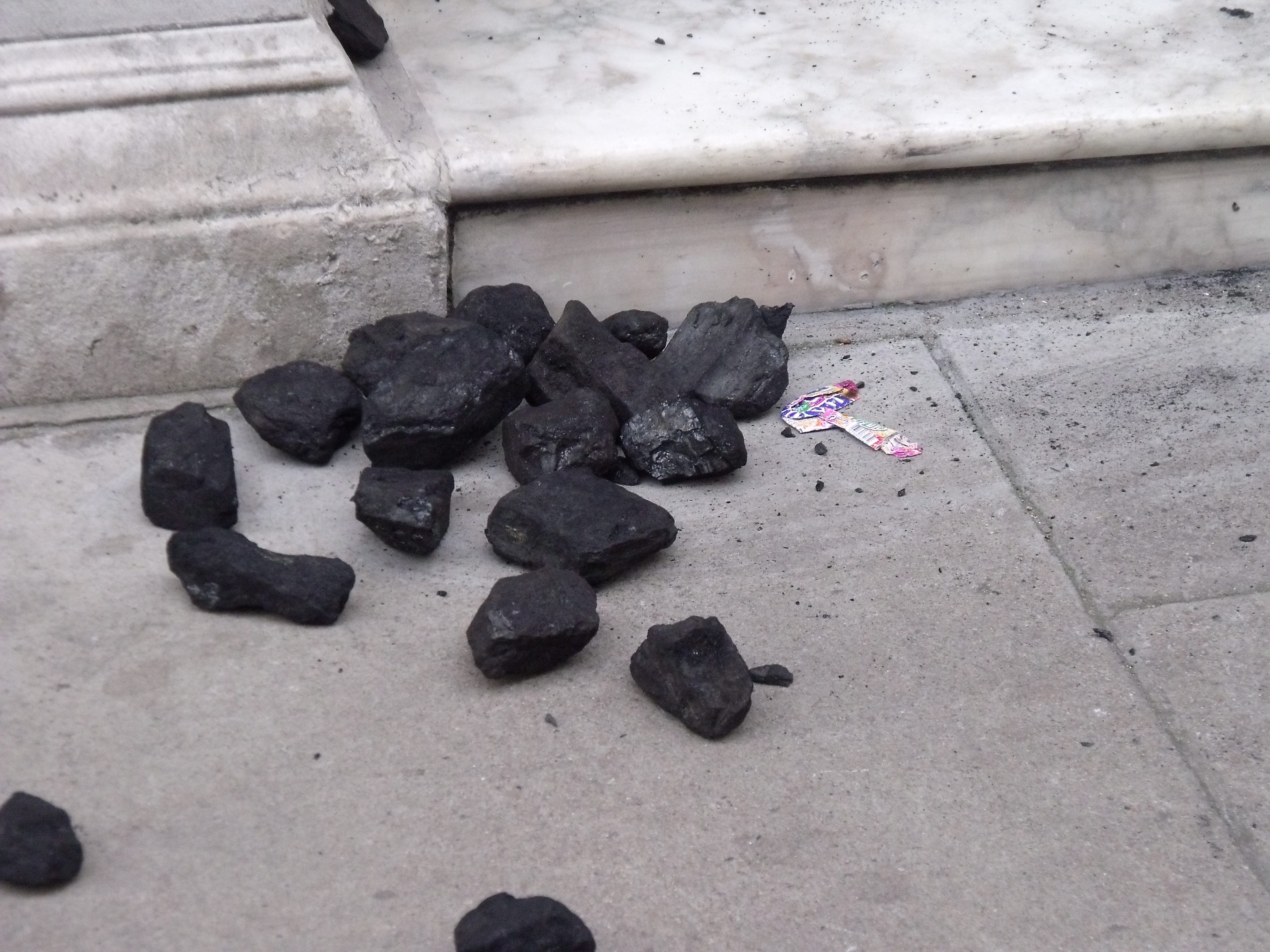
‘The Sundarbans Declaration 2016’ by the National Committee of Bangladesh

Translated By Tanmoy Karmokar


Following a three-day nationwide long march to the Sundarbans, held between 10th to 13th March, 2016 by demanding a capping of all breeds of devastative – mischeivious activities surrounding the Sundarbans, including the Rampal and Orion coal-based power projects, the National Committee to Protect Oil, Gas, Mineral resources, Port and Power in Bangladesh has declared the following ‘Sundarbans Declaration 2016’. The declaration is a demand for the enactment of 7-points programmes in order to resolve the country’s power crisis. The declaration was agreed by the protesters and marchers who joined the three-day long march to protest the coal based Rampal power plant. It was signed by the central leaders of National Committee and was read out at Kantakhali on 13th March, 2016.
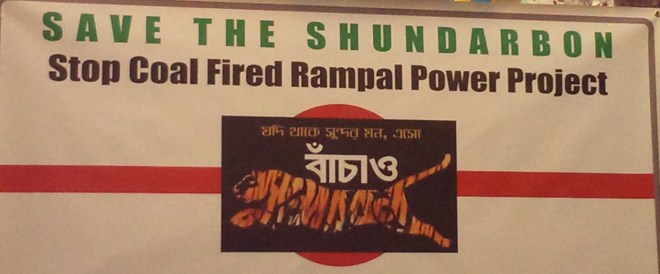
banner Sundarbans 2016 2

We, the people on the march, have reached Katakhali, adjacent to the Sundarbans, on 13th March noon, by crossing 400 kilometers in 4 days after the long march has started on the 10th March. Starting on 10th March, 2016 at the Press Club in Dhaka, we have marched to Katakhali via Manikganj, Rajbari, Faridpur, Magura, Jhinaidaha, Kaliganj, Jessore, Nowapara, Fultola, Doulatpur, Khulna and Bagherhat. Hundreds of thousands of community folks have expressed their solidarity with us in the course of progression of this long march and during the time of preparation focusing the 7-point demands and to protect the Sundarbans. People of Bangladesh from all walks of life have participated here. Some of the many organisations are: leftist progressive democratic political parties, farmers-day labours-women-students-youth-science organisations, music groups, theater groups, film organisations, study circle groups, little magazine groups and many more. Along with the political activists and leaders, there are participants from academics, school and college teachers, students, scientists, engineers, professionals, artists, writers, journalists, filmmakers, farmers, workers, housewives, and community women and men. During the long march, several solidarity demonstrations and public meetings were also held in London, Amsterdam and Paris.

During our long march in Bangladesh, we had been faced with administrative threats and harassment by Police when our long march tried to enter the district of Jessore. They attempted to downfall the long march by rescinding approval of a pre-scheduled demonstration in the final phase. Not only revocation but also had they tried to obstruct the program by menacing when entering Jessore and during our stay inside the city. But the Sundarbans long march had entered the district of Jessore by passing all the stumbling blocks, and successfully completed its journey by organising protest-rallies and processions. From today’s meeting, we, once again, strongly protest the odious conspiracy of the government and administration.

This long march has been organized with a view to voicing the ‘7-point demands’ to mitigate energy crisis, including immediate annulment of the  Rampal and Orion power projects, and to avert destruction of the Sundarbans. While the government is leading the violent invasion of the profiteers on the Sundarbans by wreck, ravage and appropriation in the name of power generation and development, people at the same time by virtue of their sovereign rights are forming a domain of resistance. This long march is part of that long-term resistance.

The Sundarbans is not just some flora and faunas but a splendid mangrove forest that offers much more than one sees. It is the noble sum of myriad lives, a peerless ecosystem and natural safety net as an extraordinary resorvour of biodiversity and a renowned world heritage. This mangrove forest does not only provide the livelihood of millions of inhabitants but also saves the life and belongings of about 40 million people from natural catastrophes like Sidr and Aila. The vast coastline area alongside the country’s geographical border and outside the border is in effect allied with the existence of the Sundarbans.

The agreement signed between the National Thermal Power Corporation  of India and the Power Development Board of Bangladesh is totally unequal, one-sided and against the national interest of Bangladesh. Likewise the Orion Company of Bangladesh- it was given permission to set up coal-based power plant by turning a blind eye to all kinds of laws and rules. Apart from the irreplaceable destruction of mankind and nature, Bangladesh will suffer from huge financial loss if this project is executed. Earlier land acquisition by abnegating the codes of environmental assessment, persecution and eviction of local inhabitants, rejection of the High Court ruling and late formulation of a self-contradictory, flawed, incomplete, and preposterous environmental assessment – all emphasised that the local and international groups are frenzied to establish these power plants. However, independent studies on and investigations about the Sundanbans implied that our forest will face a catastrophe once the power plants are established and the entire Bangladesh will be susceptible.

Long-term research by the environmental and climate scientists show that the Rampal coal-based power plant will annually generate 52 thousand tons of toxic Sulfur dioxide, 30 thousand tons of Nitrogen dioxide, 0.75 million tons of fly ash and 2 hundred thousands of bottom ash. Further, water withdrawal from the River of Pashur at a rate of 9150 cubic meter per hour, subsequent colossal discharge of the polluted water into the river, and temperature of the discharged water and various toxic elements dissolved in the water will damage the natural water flow of the river, its ability to carry sediment and the life cycle of fishes, plants and other living beings. Indeed, what we see is that ultimately aquatic ecology of the Sundarbans will be destroyed by those coal based projects. Coal transportation through the Sundarbans, liquid and solid toxic wastes from the ships, oil spillage, flood lights will be devastative for normal life cycle and biodiversity of the Sundarbans. In addition, the pollution will take on its worst form if the 565 MW Orion plant and another 1320 MW unit in Rampal will be established.

As it seems now all arrangements to assassin the Sundarbans are in full swing. The massive shelter of life by establishing Rampal and Orion power projects on the one hand, by ignoring all forms of protests from the people and rejecting expert opinions on the dire consequences, and on the other hand, various projects in the name of power plant are being undertaken for the interests of land-grabbers. The forest is getting damaged everyday by the aggression of the profiteers. Various commercial and illicit activities like shipyards, silos and cement factories are on the rise. While the country, especially the coastal areas, are facing climate change threats, many indiscreet projects along the coastal line, such as, Rampal and Madarbari are simply worsening the situation and posing new dangers to our climate and livelihood. A nuclear power plant in Rooppur is also under process of construction, posing grave threats to our environment and communities.

We want to declare firmly that sustainable solution to country’s power crisis can only be found in the implementation of the 7-point programmes of the National Committee. Sustainable development or solution to energy crisis cannot be found in destructive projects like Rampal, Rooppur or Moheshkhali power plants.

For the last one and a half decades, one of the leading issues that National Committee has been working on is how to ensure a sustainable system of constant power supply. We said:

  • If the primary fuel for energy production remains under national ownership,
  • if a ban on export of mineral resources can be legally adopted,
  • if the renewable and non-renewable fuel-based segments of power generation can be expanded,
  • if the growth of national capability can be prioritized in all these aspects, Bangladesh can very soon attain its level of self-dependency.
  • It is very much possible to deliver power in every household and a major change is agro-economy is also probable. But the power sector remains with crises and it has become increasingly expensive and aid-dependent for the government is engaged in nourishing the local and foreign plunderers instead of adopting the right path as per continuation of the previous governments. What the government has adopted in the name of energy-crisis mitigation is actually serving the local and international looters. Terrible burdens of aid along with newer threats of environmental dangers are being imposed upon people. This is why this public-march is strongly demanding the execution of the 7-point demands of the National Committee, including immediate annulment of PSC agreement, immediate cessation of handing of oil and gas resources of the Bay of Bengal over to the foreign companies without any tender process, and complete enactment of Phulbari agreement and legal ban on export of mineral resources.

We have been constantly illustrating examples that there are many choices for power generation, but there is no substitute to the Sundarbans. This mangrove forest along with the country is now bearing the bruises due to adoption of wrong governmental policies, corruptions and invasions slanted towards profits, over and over. We showed with evidence that the Rampal and Orion power plants will be the death blow. We will not let the Sundarbans, the part of our existence to be destroyed for the sake of span-less profit of some Indian Company. We will not let the local land grabbers go uninterrupted. We cannot allow our Bangladesh go in the hands of occupant pillagers – regardless of whether it is India, China, the USA or Russia. We cannot let our Bangladesh emerging from the freedom fight drag into some imperial ploy.

In order to save the Sundarbans, situated alongside both the borders of Bangladesh and India,  and to prevent our existence from being destroyed by a coal-based project, this is a timely call to join our hands with our Indian activists and community people. We are demanding the Indian government to repeal this project and also urging the people of India to join the fight. It is also a juncture when we need to interconnect the fight of the people across the world. Many have already expressed their solidarity with us, whom we would like to thank and congratulate as timely comrades.

We demand the Bangladesh government to immediately stop all kinds of vindictive activities against the Sundarbans. We also demand an immediate constitution and implementation of ‘The Sundarbans Policy’ to help the forest develop in a healthy and regenerative way. We are demanding from the long march that, Rampal, Orion and all other harmful projects around the vicinity of the Sundanbans must be turned around within 15th of May. If necessary, we urge the government to come to an open discussion or debate with us. And if the government fails to abandon this cataclysmic project within this time line, we with the rank and file of the country will be compelled to declare Dhaka going long march, sit-in, besiege, strike, blockade and other programs to trigger a larger movement.

We urge scientists, engineers, academics, writers, artists, day-workers, farmers, students, teachers and community women and men at all levels of the society to strengthen the national defense by collective and active participation. It is this Sundarbans that protected us from dangers in many ways. To protect these beautiful and kind forests is our national obligation. We all have to come forward with this obligation. We shall in no way let our noble and motherly icon Sundarbans be a victim to profits of the local and international extortionists.


Kantakhali. 13th March, 2016

#SAVEtheSUNDARBANS   #StopRAMPALPowerPlant  #NOCOALbasedPOWERPLANT
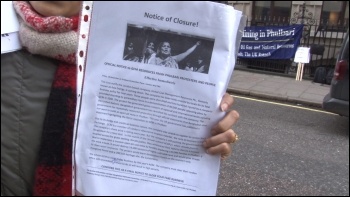
Bangladeshi Protesters served notice of closure to British coal mining company

11 months old Usha says NO to Coal Mine, GCM receives warning at AGM  

By Raaj Manik

OFFICIAL NOTICE to GCM RESORUCES FROM PHULBARI PROTESTERS AND PEOPLE

Effective Immediately

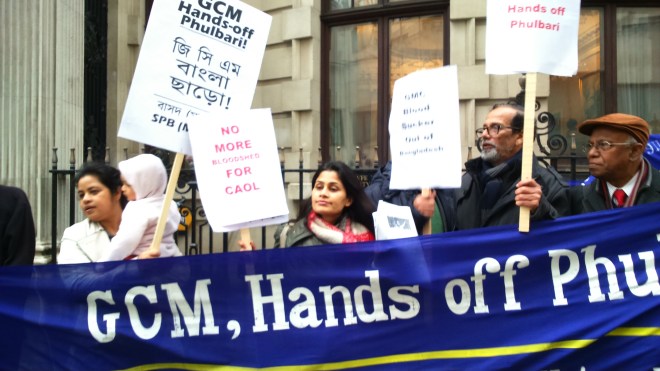
Phulbari Solidarity Group Founder read out a Notice of closure to GCM at the demo on Friday Photo by Pete Mason

Friday, 18 December 2015, at 10:30am|4 Hamilton Place | London W1J 7BQ

This is to notify the London-based company, Global Coal Management Resources Plc., formerly known as Asia Energy, is coming down. The company has been hotly resisted by locals for its fatal business policy for nine years. Three people were shot dead and two hundred injured by company-provoked shooting by paramilitary force in a demonstration of 80,000 people opposing plans by GCM in 2006.

The project has generated grave concern at national and international levels including the United Nations. Bangladesh government has cancelled the contract with the company. The government has repeatedly reassured protesters by official statements that Bangladesh does not want to build open pit mine in Phulbari. This year the UK government has published a statement highlighting the fierce opposition to GCM in Phulbari.

Due to its dodgy and unethical nature of business, the company was unable to register to London Stock Exchange. GCM is a member of London’s Alternative Investors Market. We note its business is dire. The company’s share price is falling every year. But the company is still pushing the government of Bangladesh for a fatal deal.

In the month of the climate summit #COP21, when climate protests erupted across the globe seeking climate justice, they announced AGM to discuss a noxious deal to implement a massive open-pit coal mine by forcibly displacing 130,000 families in Phulbari. If the mine is built, it would destroy 14,600 hectares of highly cultivable land and would pose threats to clean water resources. The project would leave devastating impact on the country’s only mangrove forest and a UNESCO heritage site, the Sundarbans.

We advise GCM to close dodgy business by this year’s AGM. The company must clear their London office with immediate. Failure to do so will result in high penalty.

CONSIDER THIS AS A FINAL NOTICE TO CLOSE YOUR FAKE BUSINESS!

For further information contact: Bangladesh National Committee, UK branch http://protectbdresources.org.uk, http://www.ncbd.org and Phulbari Solidarity Group: https://phulbarisolidaritygroup.wordpress.com/

Cliamte change protesters outside the AGM of GCM Resources demonstrate on Firday 18 December 2015 DSC_0240 (2)

On Friday 18 December 2015, the above notice of closure was served to an AIM-listed British mining company by Bangladeshi community and transnational campaigners to save Phulbari and the green land in northwest Bangladesh. After a successful noise-demo outside the company’s Annual General Meeting, the founder of the Phulbari SolidarityGroup and an eye witness to the carnage in Phulbari on 26 August, 2006, Rumana Hashem has read out the Notice of Closure on behalf of all protesters.

The demo organised by Phulbari SOlidarity Group and the UK branch of Bangladesh National Committee was participated by community women and men, and transnational climate change activists.

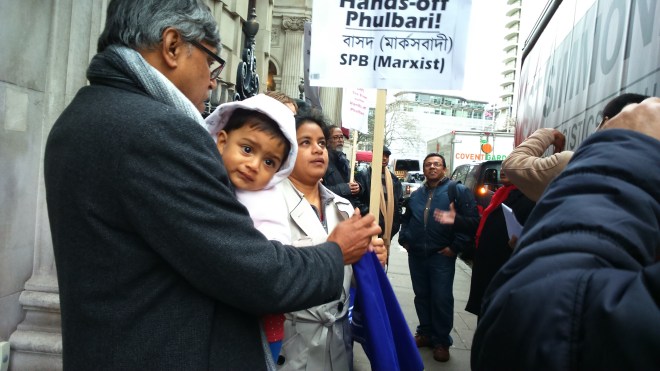
Community women from Dinajpur and Phulbari joined the demo with their children as young as 11 months old.  They chanted slogans, banged spoons and played noisy flute to disrupt the Mayfair AGM of Global Coal Management. They said that GCM has no place in Bangladesh.

DSC_0260 (2)

Little Usha holds placard with his grand dad and mum from who came from Dinajpur to serve a notice of closure to GCM. Photo: Rumana Hashem

In the end of the demo the above notice of closure was served to GCM, which was handed into the board by their dissident shareholders who attended the AGM and questioned the company’s board about the social, economic and environmental impacts of the proposed Phulbari coal project. The dissident shareholders were greeted by other shareholders for raising important and timely questions. The board was clearly embarrassed when the Bangladeshi activists challenged the validity of the suspended contract with Bangladesh government.

Transnational advocates for climate change joined the demo with community activists. Indian anti-mining campaigner and the founder of Foil Vedanta, the activists from the London Mining Networks, leaders of the Socialist Party and the Tower Hamlet’s Trade Unionists and Socialist Coalition stood in full solidarity with the Phulbari activists and community environmentalists. Three representatives of the protesters walked into the AGM and questioned the chair of the company about illegal share business, and workers injuries in the shooting on 26 August in 2006.

DSC_0252 (2)

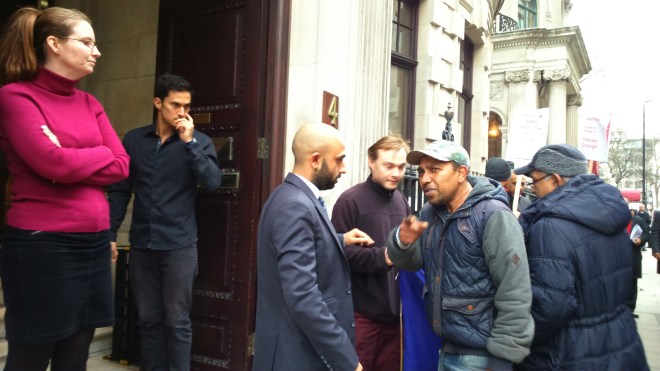
Protesters took over the entrance to block the investors which led to an argument with the company security personnel who tried to protect the company executives. Photo: Rumana Hashem

Protesters said that this year’s AGM would be GCM’s last ever meeting in London. In a notice of closure, they denounced the company as a fraudulent corporation that does not have any valid contract with Bangladeshi government. The company does not hold any other valid business elsewhere in the globe but they are selling shares in London’s alternative investors’ market. The protesters called upon Michael Tang and Gary Lye to close GCM’s London office without delay. The protesters and the Bangladeshi community activists would lock the company’s head office at Piccadilly in June 2016, otherwise, they said.

Watch video of the demo , with thanks to Socialist Party of England and Wales:  https://www.youtube.com/watch?v=fhxPY8LFPxA&feature=youtu.be

A detailed report of the interrogation inside the AGM is here: GCM Withering and Wilting [http://londonminingnetwork.org/2015/12/gcm-withering-and-wilting/]

Photos of the demo can be accessed via Peter Marshall’s London Diary on Phulbari: http://mylondondiary.co.uk/2015/12/dec.htm#phulbari

More photos and video links can be accessed via Facebook Action-demo event page: https://www.facebook.com/events/180360322310156/

Further press coverage can be accessed via below links:

Protest in London against Phulbari coal mine: http://en.prothom-alo.com/bangladesh/news/89367/Protest-in-London-against-Phulbari-coal-mine

Protesters fight coal mining project in Bangladesh: http://www.socialistparty.org.uk/articles/21925/20-12-2015/protesters-fight-coal-mining-project-in-bangladesh

GCM IS COMING DOWN!

Action Demo in London to Save PHULBARI & Green-Farm Land

Friday, 18 December at 10:30am, 4 Hamilton Place,  London W1J 7BQ (nearest tube station Hyde Park Corner)

In the month of the climate summit #COP21, when climate protests erupted across the globe seeking climate justice, a London-based AIM-listed multinational company, Global Coal Management Resources Plc. , announced its AGM to discuss a noxious deal to implement a massive open-pit coal mine by forcibly displacing 130,000 families of farmers in Phulbari. If the mine is built, it would destroy 14,600 hectares of highly cultivable land in northwest Bangladesh. It would also pose threats to clean water resources and would leave devastating impact on one of the world’s largest mangrove forests and UNESCO heritage site, the Sundarbans.

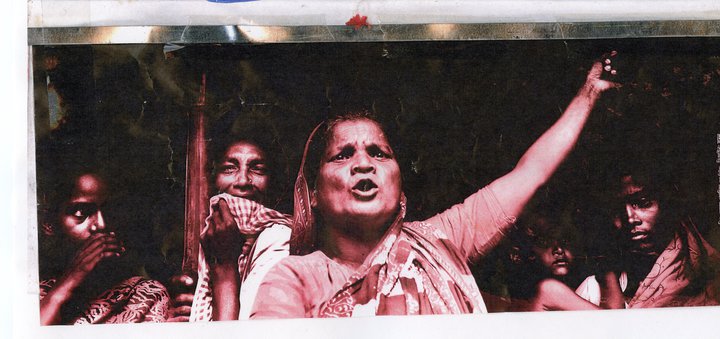
Phulbari outburst on 26 August 2006

The mothers and wives of murdered villagers in Phulbari calling the investors of Asia Energy (now GCM) after the shooting on 27 August in 2006.

The company, previously known as Asia Energy, has been hotly resisted by locals for its fatal business policy. Three people were shot dead and two hundred injured in a demonstration of 80,000 people that took place in opposition to plans by GCM in 2006. Bangladesh government has cancelled all contracts with the company nine years ago. The government has recently reassured protestors by a statement that it does not want to build an open pit mine in Phulbari. The project has generated grave concern at national and international levels including the United Nations. This year the UK government has published a statement highlighting the fierce opposition to GCM in Phulbari. But the company has so far ignored every message. It has been pushing the government of Bangladesh for a fatal deal. We advise GCM to close business NOW!

JOIN US inside and outside the AGM! We will warn them to close AGM forever!

RSVP to join us via https://www.facebook.com/events/180360322310156/

Please Bring along your banner, placards, festoons, whistles, drums, masks and messages against dirty coal miners. We will declare a notice of closure to GCM and we’ll celebrate the news that Bangladesh government has reassured there is no plan to open pit mine.

Contact for further information: Dr Akhter S Khan: nationalcommittee.uk@googlemail.com, Dr Mokhlesur Rahman qmr111@hotmail.com, Rumana Hashem: phulbarisolidaritygroup@gmail.com

Bangladesh National Committee, UK branch| Phulbari Solidarity Group, UK| 

UK Government Highlights Powerful Opposition to GCM’s Destructive Plan for Bangladesh Coal Mine

Victory of Phulbari Once Again!

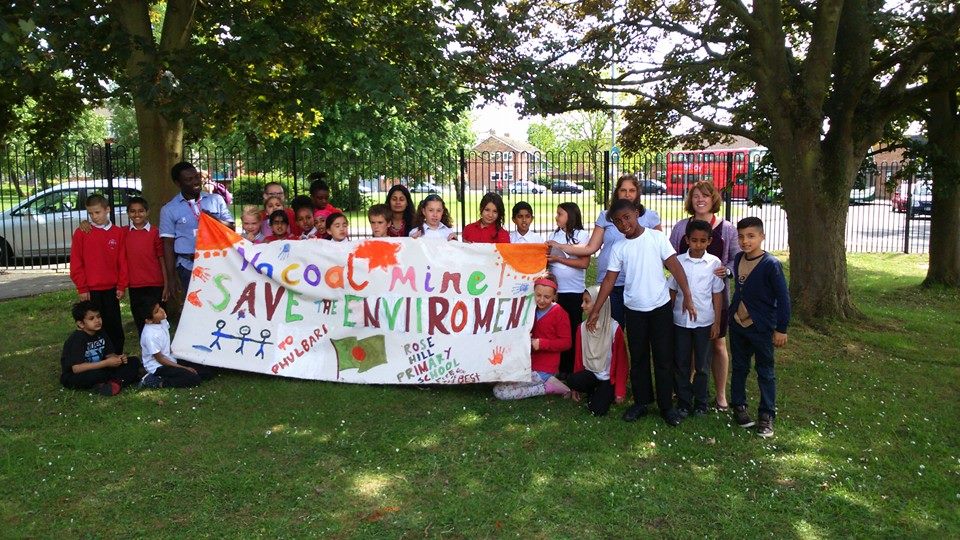
Pupils at Oxford's Rose Hill Primary School painted banner against open cast mine to express solidarity with Phulbari people . 18 June 2015. Photo: Andy Edwards

Pupils at Oxford’s Rose Hill Primary School painted banner against open cast mine to express solidarity with Phulbari people . 18 June 2015. Photo: Andy Edwards

The UK government has published a statement yesterday that highlights the fierce opposition to British company GCM Resources’ plans for a massive open cast coal mine in Phulbari, north-west Bangladesh. The statement notes that protestors are “calling strikes, blockading roads and occupying the company’s local offices”.

The statement by the UK National Contact Point also expresses “regret” that the company had failed to update its plans or produce a human rights impact assessment for the project, as recommended in the findings of its investigation under the OECD Guidelines on Multinational Enterprises in November 2014.

The AIM-listed British corporation GCM Resources Plc.’s planned coal mine in Phulbari has provoked repeated protests by local people and communities for nearly a decade. Three people were killed and more than 200 were injured when paramilitary officers opened fire on a demonstration against the project in 2006. Even so, powerful protests by resilient communities in 2013 and 2014 forced the company’s notorious CEO, Gary Lye, to abandon visits to the area.

Campaigners in Bangladesh are clear that any moves by the company to enter Phulbari would provoke further protests.

The UK government’s investigation has followed a complaint submitted by the Global Justice Now and International Accountability Project in 2012. It has condemned the company for breaching international guidelines on ethical corporate behaviour, stating that the project “has aroused considerable opposition in Bangladesh, leading to violent protests, and an even more violent response by the authorities there”.

Yesterday’s statement also notes recent statements from ministers and officials at the Bangladesh Government’s Power, Energy and Mineral Resources Division that GCM does not have a valid contract with the Government of Bangladesh, and that the Government of Bangladesh has no intention for open cast coal extraction to take place in the region, which includes some of the country’s best agricultural land. These statements follow demands made by protesters against the project that the Bangladesh government should ban open cast mining and remove GCM from the country.

Christine Haigh, campaigner at the Global Justice Now, said:

Today’s statement is further evidence that the Phulbari coal mine cannot go ahead. If it does, it will be a human rights disaster. Local people have repeatedly made it clear that they don’t want it and any moves by GCM to move this project forward will be met by further resistance.”

She added: While GCM are claiming this report vindicates them, in reality it does anything but. The main problem is the inability of the British government to enforce human rights standards on companies like GCM, leaving people affected by British companies around the world with no right to legal redress for the injustices they face. This must change.

Rumana Hashem, the founder of Phulbari Solidarity Group and an eye witness to the 2006 shooting in Phulbari, stated:

It is good that the UK government has eventually recognised that GCM has failed to develop appropriate communication with the communities in Phulbari. It was a mistake for the NCP to take this long to understand the power of people. They have previously undermined the powerful opposition that exists and that has made possible a halt to the detrimental project of the British company.

Rumana added: I have seen how resilient the movement is in Phulbari. Bangladesh government has expressed solidarity with the community’s view and said ‘no to GCM’. GCM must forget this project. It is reassuring that UK government has recognised that local people will not give in. They will fight for their land until last breath.

The mine would force up to 220,000 people from their land, destroying their homes and livelihoods, and would threaten the Sundarbans – one of the world’s largest remaining mangrove forests and a UNESCO World Heritage site.

The UK government states that GCM must take into account the UN Declaration on the Rights of Indigenous Peoples, which stipulates that no developments can take place on indigenous peoples’ land without their ‘free, prior and informed consent’. Bangladesh’s National Indigenous Union says the mine would displace or impoverish 50,000 indigenous people from 23 villages

Seven UN human rights experts have called for an immediate halt to the project, citing threats to fundamental human rights, including the rights to water, food, adequate housing, freedom from extreme poverty and the rights of indigenous peoples.

Read Press Release by Global Justice Now here: http://www.globaljustice.org.uk/news/2015/sep/10/uk-government-highlights-community-opposition-gcm-resources-plan-bangladesh-coal

Homage paid to Brave Protesters in Phulbari

By Raaj Manik

It was Phulbari Day on Thursday. It was the day to commemorate mass protests that prevented a UK-based mining company, Global Coal Management PLC, from building a large-scale open-pit coal mine in Phulbari in north-west Bangladesh. Nine years ago, on 26th August in 2006, three brave protesters were shot dead in the mass protest that took place in opposition to plans by GCM, a London based AIM-listed corporation, who wanted to forcefully displace 130,000 people from their homes by grabbing 14,600 hectares of highly cultivable land in Bangladesh. The powerful demonstration in 2006 ended in tragedy when paramilitary force opened fire on a rally of 80,000, people, leaving three people killed and two hundred injured.

The 26th August has been marked as a day for commemorating the protesters in Phulbari since then. On the ninth anniversary on 26 August 2015, the day was remembered with respect, as ever, and people’s resistance was celebrated by diverse groups and rights-activists across Bangladesh and in London. In Bangladesh, campaigners of National Committee at Phulbari, Dhaka, Narayanganj, and several other regions were joined by many other human rights and art groups who paid homage to Phulbari protesters.

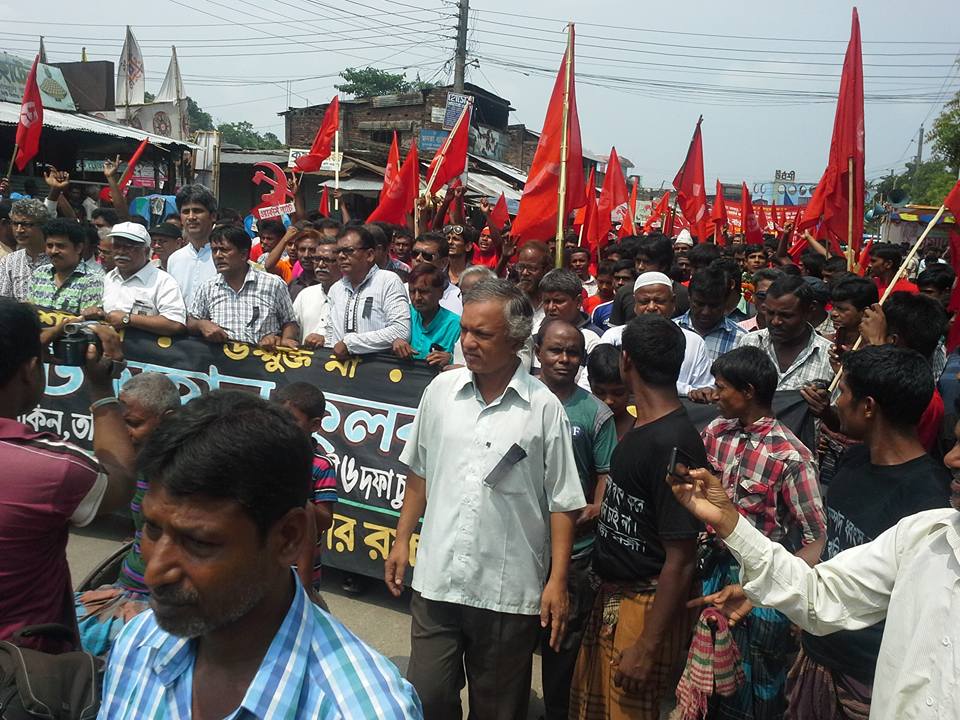
Rally in Phulbari on 26 August 2015 . Photo credit: Anonymous

Rally in Phulbari on 26 August 2015 . Photo credit: Anonymous

In Phulbari, nearly ten thousands of people have paid tribute to Al-Amin, Salekin and Tariqul – the three innocent civilians killed by GCM-provoked shooting in 2006. People have started to gather in the town as early as seven o’clock in the morning to pay homage to those who died that day and to celebrate the people-powered resistance that has prevented the massive mine being built for almost a decade. Schools, colleges, shops and business enterprises were shut for all day in tribute to those brave protesters who forced the British coal miners to leave Bangladesh. The procession of homage, initiated by the Phulbari branch of National Committee, was joined by farmers, agricultural workers, rickshaw-drivers, van-store employees, school teachers, doctors, medical students, professionals, art-activists, business entrepreneurs, and of course local leaders of political parties. Parents of the dead, Al-Amin and Salekin, and the injured men including Bablu Roy and Pradip attended the rally in the town centre.

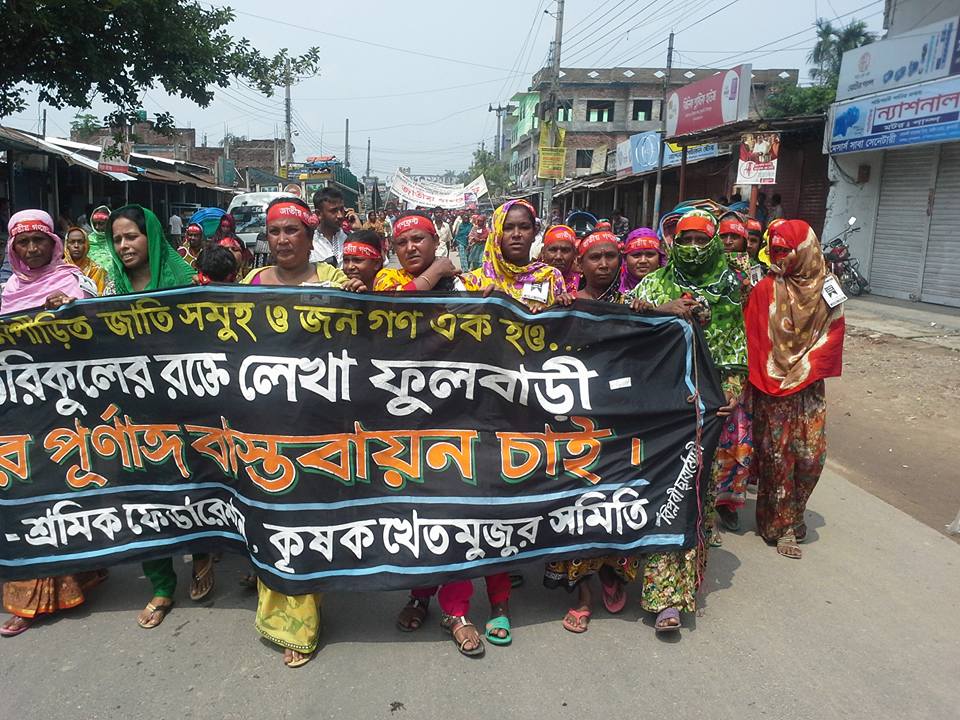
Families of the victims and women protesters march towards Shahid Minar in Phulbari to pay tribute. 26 August 2015. Photo: Anonymous

Families of the victims and women protesters march towards Shahid Minar in Phulbari to pay tribute. 26 August 2015. Photo: Anonymous

Locals in Phulbari called upon the government to remove fabricated cases against leaders of the Phulbari movement. They demanded for an immediate implementation of the Phulbari deal and called upon a permanent expulsion of Asia Energy, the Bangladesh subsidiary of GCM , from Bangladesh. Activists have also asked government to compensate the affected people in Borapukuria mine. Leaders of National Committee announced fresh programme to be held later this year against government’s destructive policy of coal-powered plant in other parts of the country. The rally called upon the government to implement the 7-point demands of the National Committee and to prevent Rampal coal-fired power project from happening which would destroy the countries only mangrove forest and a UNESCO heritage, the Sundarbans. They demanded that Orion coal-fired plant must be resisted and suspended immediately.

The same demands were projected in the tribute to Phulbari resistance in other parts of the country, and in East London. In London, members of the UK branch of the Bangladesh National Committee to Protect Oil, Gas, Mineral Resources, Power and Ports, and activists of Phulbari Solidarity Group were joined by transnational campaigners and environmentalists from Global Justice Now, UNISON, and the Socialist Party of England and Wales. Messages of support and solidarity were delivered by representatives from Tamil Solidarity, National Trade Union and London Mining Network, also.

In the meeting at the Montefiore Centre in East London transnational activists have taken a pledge to resist all sorts of conspiracy for coal-fired power in Bangladesh. The member secretary of the committee in the UK, Dr Akhter Sobhan Khan, has updated the forum about development in Bangladesh. That Bangladeshi government has eventually recognised that due to the high population density and the fact that much of the local economy is based on agriculture and other land-based livelihoods, open cast mining is not a viable project for Bangladesh. The forum welcomed this news of a recent statement by Bangladesh’s state minister for power, energy and mineral resources, Nasrul Hamid that the government does not want to use open pit mining in the region.

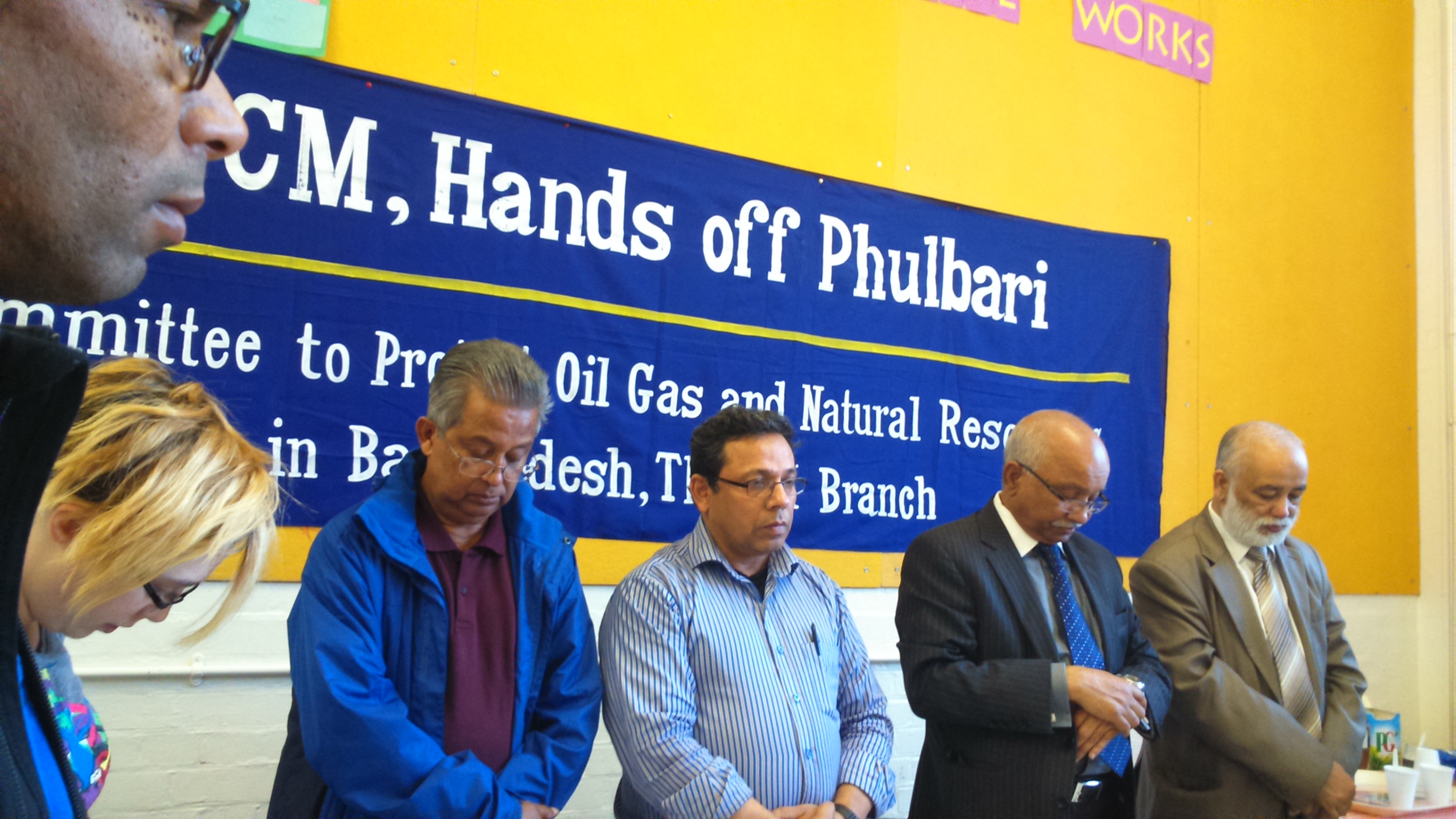
Tribute to Phulbari protesters paid in London by following silence. Photo credit: Rumana Hashem

Tribute to Phulbari protesters paid in London by following silence. 26 August 2015. Photo credit: Rumana Hashem

The meeting, presided by Dr Mukhlesur Rahman, has started by following one minute silence in the honour of Al-Amin, Salekin and Tariqul. Participants have discussed recent developments in the campaign against the mine. The Chair of the meeting has updated the forum about the invalid contract between the government and the company.

The founder of Phulbari Solidarity Group and an eye witness to the shooting in Phulbari, Dr Rumana Hashem, gave her eye witness to the tragic event and the deadly shootings. She described how local women and men had made the company to leave the area. She noted that locals are still vocal against the mine as they recognised that the mine, if built, would cause mass evictions and destroy thousands of hecters of farmland in an area that forms part of the country’s breadbasket. Rumana’s statement was followed by speeches by comrades such as Dr Jinnah, comrade Moktar, Mostofa Kamal, Ishak Kajol and several others.

Christine Hague, who joined the meeting to represent Global Justice UK, then delivered a message of solidarity from Global Justice Now, in which she said that Global Justice Now has been supporting the campaign against the mine since 2008. They have been putting pressure on investors, which saw Barclays and RBS withdraw their support, exposing the UK government’s support for GCM and joining protests at the company’s AGM each year. They have also supported US-based International Accountability Project to submit a complaint to the UK National Contact Point for the OECD Guidelines on Multinational Enterprises, in the hope of using this mechanism to hold GCM to account.

Although the complaint was accepted for investigation, the UK NCP failed shamefully to consider the impacts of the project should it go ahead, focusing only on the company’s actions in the planning stage to date. GCM was still found to have failed to “foster confidence and trust” in the local community though it was otherwise let off the hook with a recommendation that it update its plans and carry out a human rights impact assessment. This is, as colleagues in Bangladesh noted, likely to lead further unrest. In fact, within four days of the publication of the final statement on the complaint, a visit by GCM’s CEO, Gary Lye, to the area triggered three days of protests and strikes, including an occupation of GCM’s offices in Phulbari.

Part of the London gathering on 26 August 2015. Photo credit Zahanara Rahman

Part of the London gathering on 26 August 2015. Photo credit Zahanara Rahman

But the failure of high level international mechanisms like this made Thursday’s gatherings in recognition of the mass resistance to the project of Phulbari ever more important. A representative from UNISON, Hugo Piere, told the forum that UNISON would be proud to be part of any campaign or action that the community takes against GCM in future. A full-solidarity has been expressed by both UNISON and the Socialist Party of England and Wales.

Likewise, Isai Pryia from National Trade Union and Tamili Solidarity has sent message of solidarity. The message which Helen Pattison of Socialist Party delivered to the gathering states: ‘Although, unfortunately, Tamil Solidarity couldn’t make the meeting today we stand in solidarity with you. We remember the dead and fight for the living. We hope that we will be able to work more closely together in the future’.

Activists take pledge to stand with Phulbari people. 26 August 2015. Photo credit: Rumana Hashem

Activists take pledge to stand with Phulbari people. 26 August 2015. Photo credit: Rumana Hashem

The meeting has ended with a pledge that any attempt to implement coal-fired plant in Bangladesh will be resisted and solar energy should be promoted. People in both Bangladesh and London have acknowledged that despite the tragedy, people in Phulbari have made an example by preventing the devastating project from happening for almost a decade. It is solid people power. And that’s definitely worth celebrating.

But sadly, the news of celebration and commemoration in Phulbari remains under-covered in mainstream media. Professor Anu Muhammad, the member secretary of National Committee and a leading economist in Bangladesh stated: ‘while the significance of Phulbari resistance has been recognised by national and international environmentalists, with the exception of a few newspapers mainstream media has ignored the news of Phulbari Day.’

The fight for people’s right, nature and environment must move forward. Activists in London have now decided to hold a symbolic protest this September when the Bangladesh’s Energy Advisor Toufiq Elahi visits London.

Govt says ‘no’ to open-pit mine in Bangladesh

Another day of victory for Phulbari, another day of loss for Global Coal Management

On Sunday, 23 August, 2015 Bangladesh’s state minister for energy and mineral resources stated that there is no hope for any mining company to extract coal from the coal deposits of Northwest Bangladesh in Phulbari. In a published report yesterday, the country’s national daily newspapers reported the news widely. We have reproduced a detailed report by the staff correspondent of New Age below.

DSCF7409

The state minister for power, energy and mineral resources, Nasrul Hamid, on Sunday said that the government was not interested to extract coal from the deposits in the north Bengal region using open-pit method.
‘We have decided not to extract coal right now… We must consider high density of population and the agro-based economy of the mining area,’ he said while addressing as the chief guest a seminar on ‘Energy Challenges to Vision 2030.’ The discussion was organized by weekly Energy and Power magazine.
Instead, the government is planning to use imported coal to run large power plants to be installed with a combined generation capacity of about 20,000 MW by 2030, he said. Nasrul’s remark came three days ahead of August 26, the 9th anniversary of the killing of protesters who had opposed in 2006 a move for open pit mining by London-based Asia Energy company at Phulbari of Dinajpur.
The then Bangladesh Rifles men had opened fire on a peaceful rally and killed at least three people. On that day, police, RAB and BDR indiscriminately had beaten people, injuring over 200 children, men and women who attended that peaceful rally and demanded cancellation of the project.
The inhabitants feared it could destroy the underground water aquifer, biodiversity, and agriculture of the region.
The government, under the Power System Master Plan-2010, had contemplated to exploit coal through open-pit method from two coal deposits located at Phulbari and Barapukuria of Dinajpur to run power plants with total capacities of 11,000 MW. The plan, however, was dropped from the revised PSMP in 2015.
Energy expert and a professor at Geology Department of Dhaka University Badrul Imam said that it would not be fair to compare the socio-economic and geological realities of Dinajpur with any location in Australia, Germany or even in West Bengal while mining coal, using open-pit method.
He said that the top two leaders of Awami League and BNP had made a commitment to the people of Phulbari that they would not allow such method in future. At the seminar, a number of open-pit campaigners, however, spoke in favour of open-pit method to ensure supply of primary fuel.
Energy expert Khandkar Saleque Sufi and M Tamim presented two papers addressing the potential crisis of energy sector, particularly while ensuring supply of primary fuels to power stations, industries, households and transport sector.
At the seminar, speakers along with Sufi and Tamim argued that the country was going to be entirely dependent on imports of primary fuel as the reserve of natural gas was depleting. Tamim also said that there was a huge disparity in electricity consumption by the rural and urban people.
Tamim showed that the rural people, who constitute 66 per cent of the total population, consume 31 per cent of electricity with only one per cent growth while the urban people, who represent 34 per cent of the population, consume 69 per cent of electricity with four per cent yearly growth.

See more at: http://newagebd.net/150774/govt-says-no-to-open-pit-mine/#sthash.3l1YnBcw.3tVplMM4.dpuf

Or visit: http://newagebd.net/150774/govt-says-no-to-open-pit-mine/#sthash.3l1YnBcw.3tVplMM4.dpbs