Mark the Decade of Resistance, Mark Phulbari Day!

Celebrating 10 years of Halt to Open Cast Mining, Commemorating the lives of brave Villagers

What? RED Vigil at London Stock Exchange

 When? 11am to 1pm on Friday, 26 August 2016

Where? London Stock Exchange HQ for International Trading , 10 Paternoster Square, London EC4M 7LS  (nearest tube station: St Paul’s)

Find Map

Phulbari 2014


Friday, the 26th of August marks a decade of the Phulbari outburst. In 2006 three people were shot dead and two hundred injured in a demonstration of 80,000 people who marched against plans by an AIM-listed British company, Global Coal Resources Management , who wants to build a massive open cast coal mine in Phulbari, a location in northwest Bangladesh. The day has been called Phulbari Day since, and powerful resistance in the aftermath of the shooting against open-cast mine in Phulbari has put a decade long halt to the project. Government has cancelled the company’s license. Although GCM does not have a valid contract with Bangladesh, they are selling shares in the name of Phulbari project. The company has changed its name from Asia Energy to Global Coal Management in 2010, and continued its dodgy deals and lobbying for Phulbari coal mine in Bangladesh.

If the mine is built, 130,000 families of farmers in Phulbari would be forcibly displaced. It would destroy 14,600 hectares of highly cultivable land, would pose threats to clean water resources and would leave devastative impact on one of the world’s largest mangrove forests and UNESCO heritage site, the Sunderbans.  Despite grave concerns at national and international level, and declaration made by seven UN rapporteurs, GCM is pushing the government to give it a go ahead.

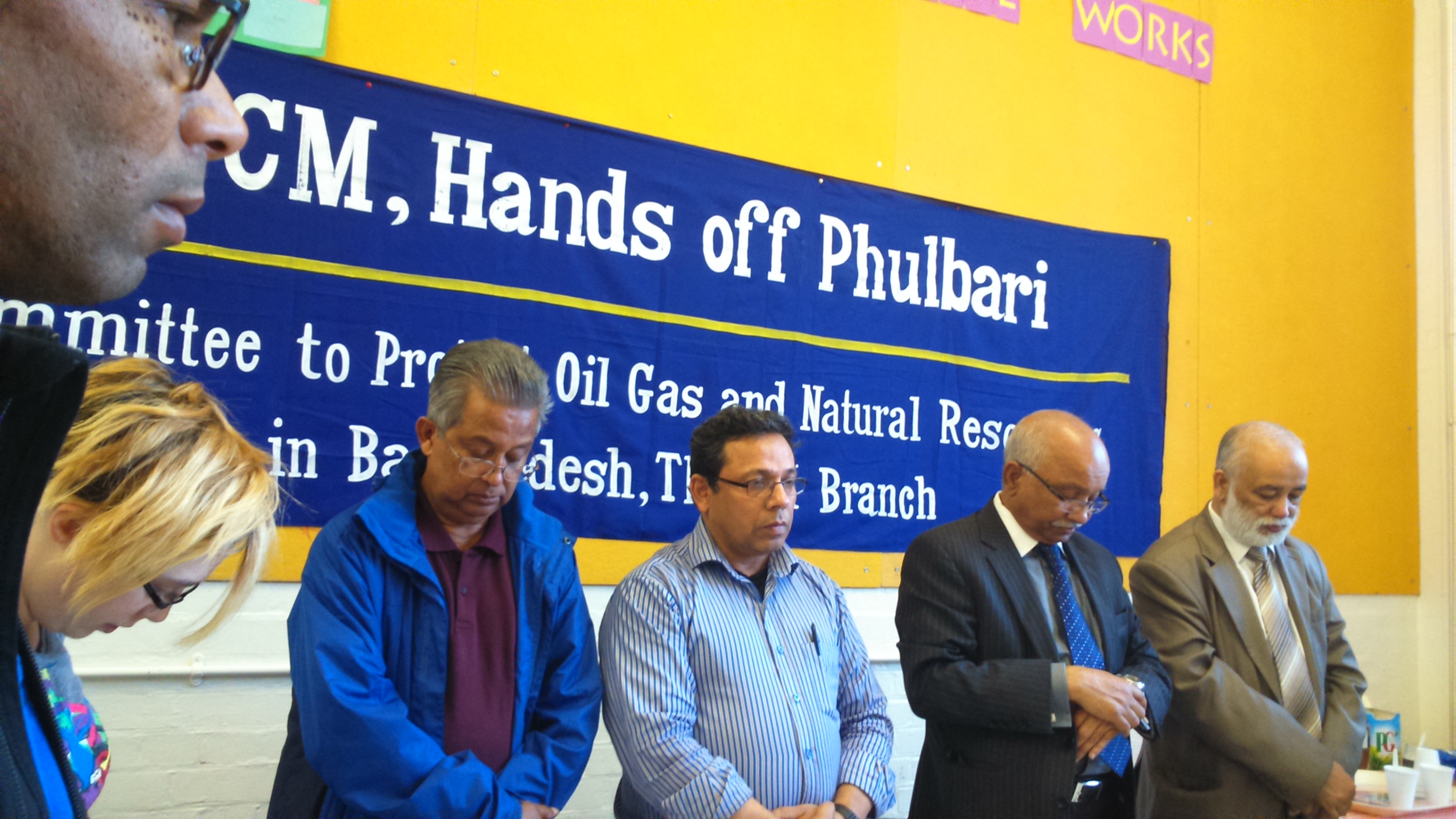
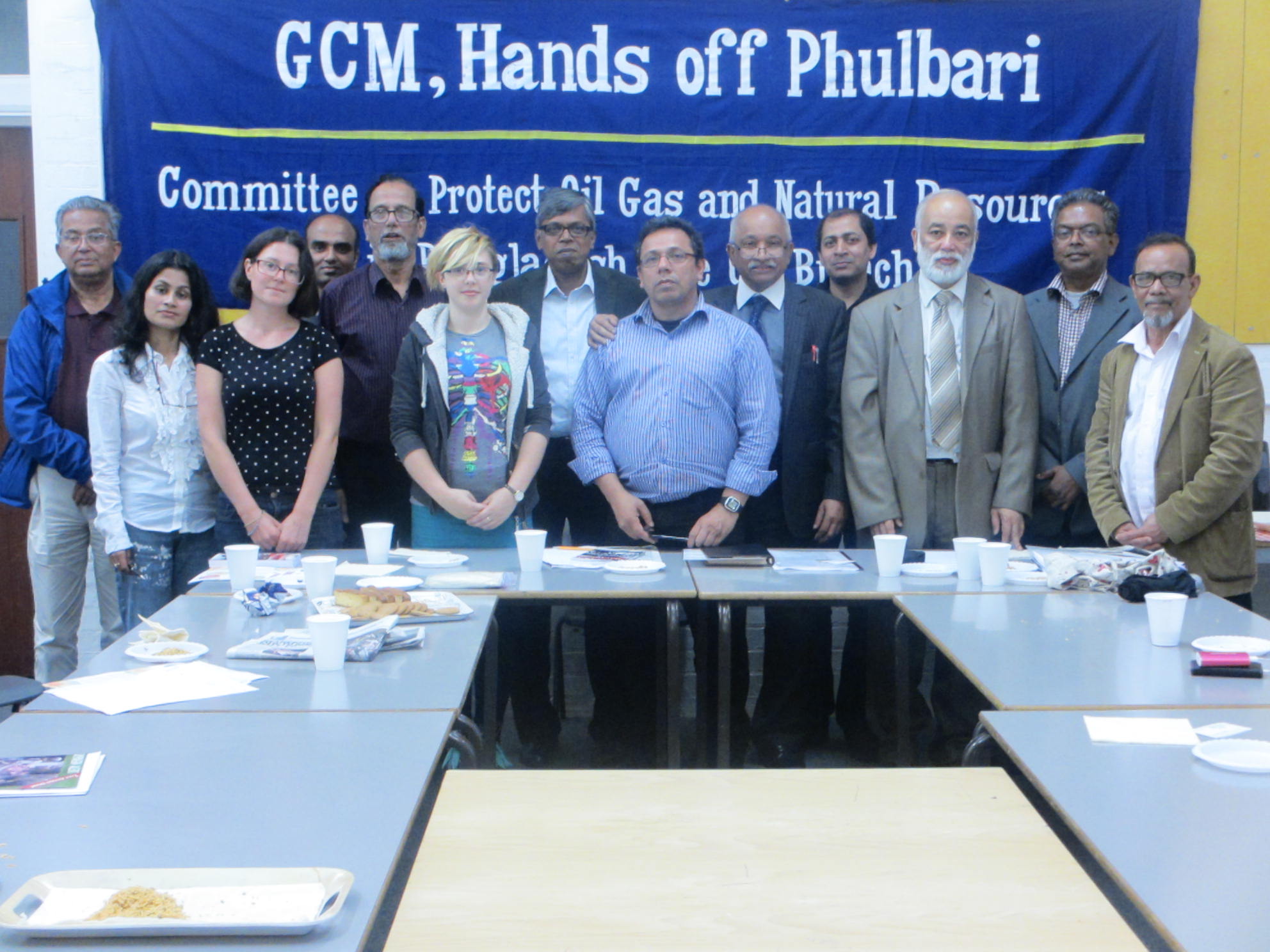
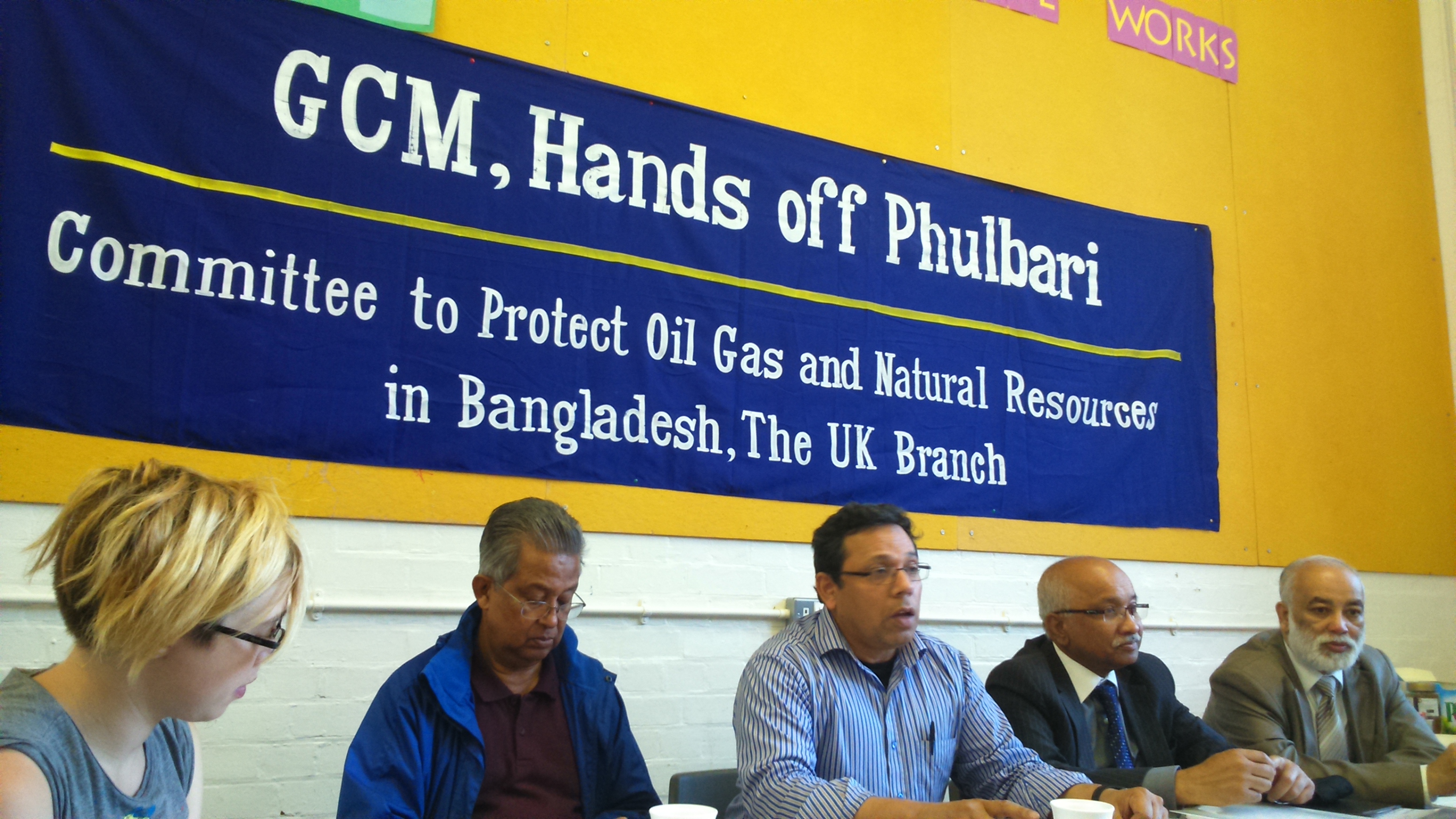
The National Committee to Protect Oil, Gas, Port-Power and Mineral Resources in Bangladesh has called upon national and global environmentalists to observe 10th anniversary of Phulbari outburst and to protest against GCM’s dodgy business and to mark the decade of Phulbari Resistance.  In conjunction with the Committee to Protect Oil, Gas, Port-Power and Mineral Resources, we will celebrate the decade-long struggle in London.

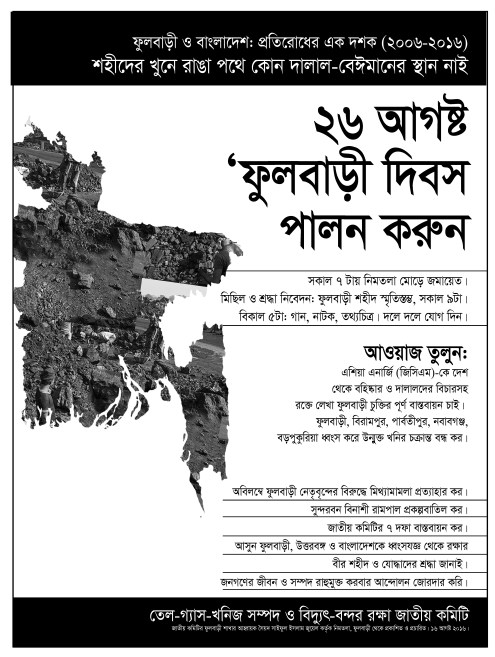
Phulbari Day POster by NCBD 2016

We will hold a Red Vigil for Victims of Phulbari outside the London Stock Exchange at 11am next Friday. We will ask London Stock Exchange to De-list GCM Plc and to show cause Gary Lye’s gang for selling fake shares. We will commemorate for the lost lives by rallying against GCM. We will celebrate our decade-long resistance by turning the commemoration event into a powerful rally against dark coal business.

JOIN US at London Stock Exchange (nearest tube station: St Paul’s).

Bring your organisation’s banner, noisy/music instruments and flowers for the victims if you can. Wear Red, Black or Blue as symbols of Resistance, Anguish and Celebration of struggle!

Please confirm participation via Facebook: https://www.facebook.com/events/641147849383562/

Contact for further information:  07714288221, 07956260791, 07861686036

Email: nationalcommittee.uk@gmail.com , phulbarisolidaritygroup@gmail.com

Committee to Protect Resources of Bangladesh, UK branch     Phulbari Solidarity Group

Download Mark the Decade of Halt, Observe Phulbari Day Flyer August 2016

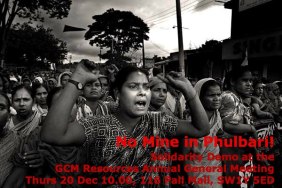
LMN call out for Phulbari Solidarity demo in London on 19 dec 2012

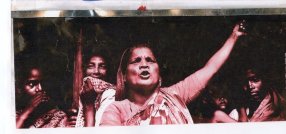
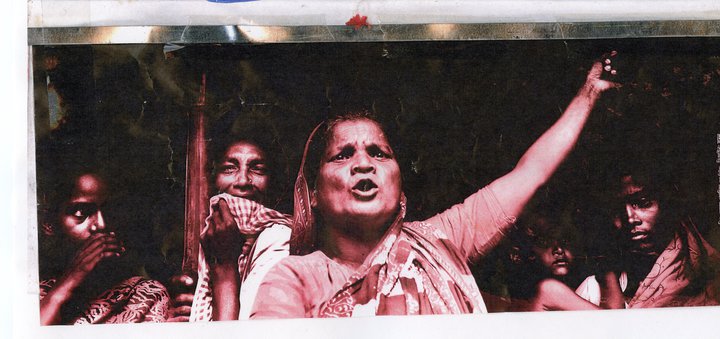
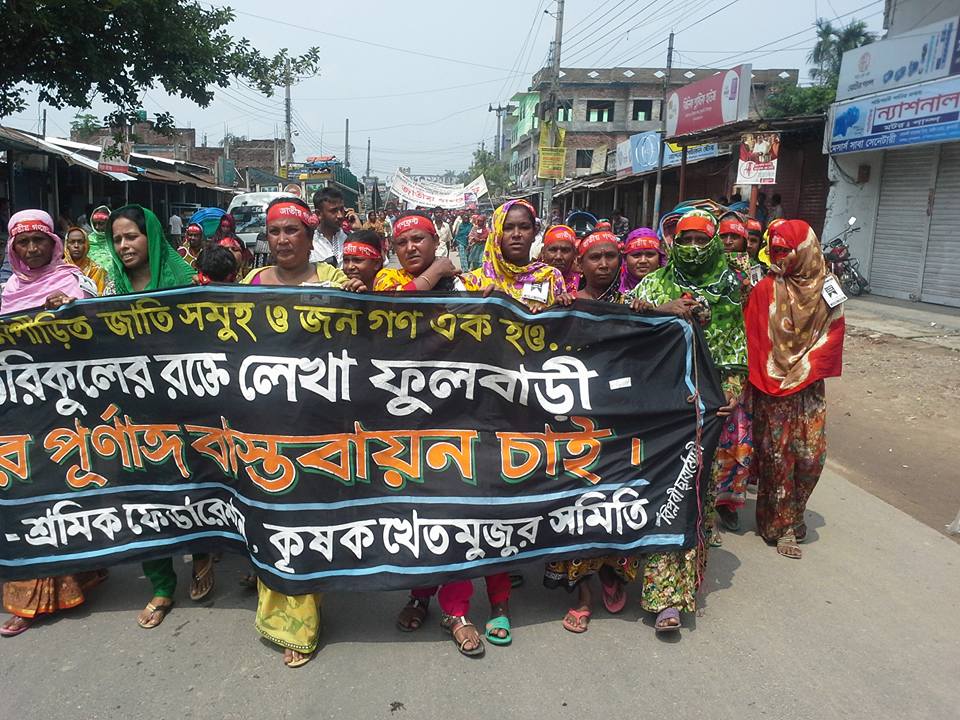
Local women, men and children cried out to save their homes, lands and lives in Phulbari in the aftermath of the GCM-provoked shooting in Phulbari. Photo: 28 August 2006

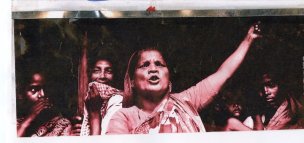
Mothers, sisters, wives and all the effected women vowed to protect  Phulbari through outburst after the shooting on 26 August 2006. Copyright: PSG


It is time for Global Day of Action against Vedanta

Phulbari Solidarity Group extends unconditional solidarity with Foil Vedanta in their fight against notorious Vedanta. Foil Vedanta, a campaign group against extractive corporation, has produced invaluable reports on mining effected areas in India and Afrika, and global trade of metals by notorious multinational company, Vedanta. We will join Foil Vedanta on their annual Global Day of Action at Vedanta’s AGM again this year. Like previous years, we will join activists to bring the defiant energy of communities fighting and winning against Vedanta around the world to London on Friday, 5 August.

The main event will be held on Friday 5 August 2016, 14:00 – 16:00 at Ironmongers Hall, Barbican, EC2Y 8AA (nearest tube Barbican).

Foil Vedanta AGM 2016 poster. Source: Foil Vedanta campaign letter 6 July 2016

Foil Vedanta AGM 2016 poster. Source: Foil Vedanta campaign letter 6 July 2016


This year, pollution affected communities of Zambia won their nine years battle in their Supreme Court, and now won the right to have their case heard in Britain. In India, the Dongria Kond of Niyamgiri in Odisha are now demanding to dismantle Vedanta’s aluminium refinery in Lanjigarh, after winning their case in the Supreme Court of India.

Parallel demonstrations are already planned in Zambia and India on the 4th August and questions raised by the communities will be asked inside the AGM meeting.


We encourage our supporters and readers to join Foil Vedanta on Friday the 5th of August to tell Vedanta to stop its notorious activities overseas.
For more information please follow the link:
http://www.foilvedanta.org/actions/global-day-of-action-against-vedanta-5th-august/

Mining is in Rapid Fall

People, climate change and future of the industry

By Raaj Manik

An international workshop on mining in South Asia was organised by Activists and Academia Network, called, the Centre for World Environmental History (CWEH) at University of Sussex in which Phulbari Solidarity Group made a robust contribution. On Wednesday 11 May 2016, a remarkable delegation of activists from the global South has shared their anti-mining community activism, and engaged with experienced colleagues in the global North working to expose the brutality of northern extractive companies in the South.

Speakers included Gladson Dungdung, who was offloaded from the Air India flight on his way to the workshop, was due to report on threats to Saranda Forest in Jharkhand, human rights abuses and the destruction of the environment by iron ore mining companies. Also front-line environmentalists and researchers from Bangladesh and India, including Malvika Gupta from University of Delhi, Rumana Hashem of Phulbari Solidarity Group, Roger Moody of Nostromo Research, and Miriam Rose of Foil Vedanta delivered insightful work and narratives of excellent grassroots struggles against mining and corporations.

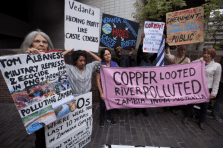
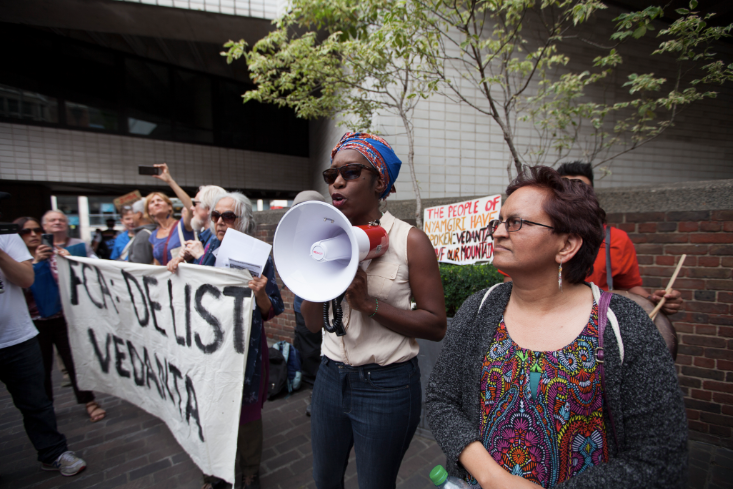
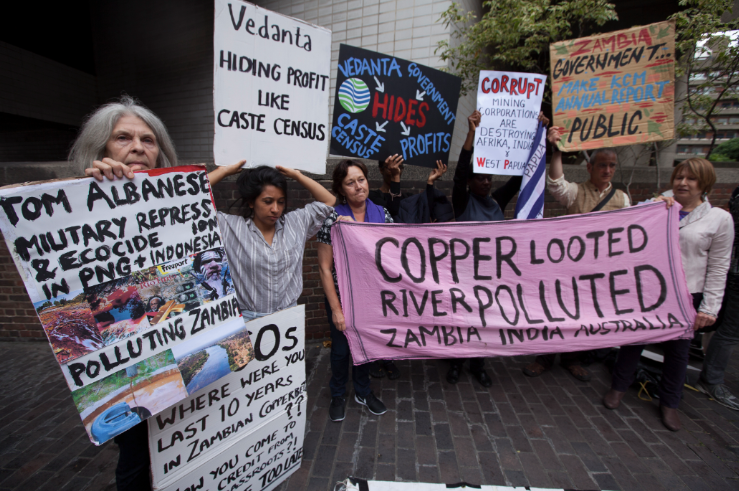
Vedanta demo London 2015

Vedanta demo London 2015

Phulbari outburst on 26 August 2006.

Phulbari outburst on 26 August 2006.


PSG founder and eye-witness to Phulbari carnage in 2006, Rumana Hashem, has delivered a talk,titled “Translating Phulbari Resistance and anti-coal struggles in Bangladesh: A bottom up approach to social movement to protect environment and indigenous rights from corporate excess”. Hashem advocates for and showed how a bottom up, informal and non-bureaucratic approach to anti-mining and environmental movement have become tremendously powerful and successful in north-Bangladesh.   

The drastic increase of privatisation and multinational corporations has not only caused environmental damage and energy injustice but also induced forced-displacement, destitution of indigenous people and farmers in southern countries, such as, Bangladesh. But resistance to extractive corporations and dodgy deals involving government sponsored companies across the South is in the rise. While Bangladesh has been taken hostage for oil, gas and coal by US, China, Indian, Russian and UK corporations, grassroots activism and people’s resistance across the country are remarkable, notes Hashem.

On 26 August in 2006, three people were shot dead at an anti-open cast coal mining outburst of 80, 000 people in northwest Bangladesh but locals were able to form powerful resistance to fight back the miners for decades. Hashem’s talk analyse anti-coal power struggles and social movements for environment and agriculture-based livelihood in Phulbari, and argued that a bottom up approach to environmental and anti-imperialist struggle has been successful in the northwest of Bangladesh.

Hashem illustrated a three-level socio-political movement, called the Phulbari Resistance, against an UK-listed company GCM Resources, formerly known as Asia Energy, that prevented the implementation of a massive open-cast coal mine in the town of Phulbari which would be destroyed by greedy corporate plans. If the mine is built, it would lead to forced-displacement of up to 230, 000 people over the course (30 years) of the project. It would increase poverty and crisis of food production in a country which struggled to provide food supply to nearly one third of its population in 2006-2010. The project would further cause water pollution and would plunder 94 percent of agricultural land in the region.  It would leave devastating impact on environment.

Hashem’s talk revealed how local farmers and indigenous people formed powerful resistance in Phulbari under the umbrella of an open platform of left-environmentalists, called the National Committee of Bangladesh, and fought a dirty extractive company, GCM Resources, in Bangladesh.  Her report exhibited that the impact of Phulbari resistance on grassroots mobilisation across Bangladesh is so that it led several other social and political movements including Save the Sundarbans, Bashkhali anti-coal plant outburst, and movement against onshore and offshore gas blocks.

Hashem insists that “it is possible to prevent forced-displacement and livelihood from increasing corporate excess only if we followed a bottom up approach to balance power at local, national and international levels, and only if a true solidarity and consensus between the northern and southern grassroots activism has been formed.”

The illuminating talk by Hashem was followed by a researcher and advocate for indigenous rights, Malvika Gupta from University of Delhi, who illustrated how indigenous kids are manipulated and re-colonised by the colonial language and English education in India. The narratives of oppression of indigenous communities by British corporation in India and Zambia were explored and discussed by Miriam Rose of Foil Vedanta, and Roger Moody of Mines and Communities and Nostromo Research, UK.

All speakers have robustly argued that mining is in rapid fall. Despite pernicious oppression and abuse by multinational corporations in the global south, extractive companies and mining across the world have been facing their downfall.

The day-long conference at the Centre for World Environmental History (CWEH) has ended with a hope that mining will continue to fall. The director of the centre, Dr Vinita Damodaran  given a vote of thanks to the superb speakers and activists who brought in new hopes to the conference room that extractive companies are likely to be vanished in near future so long as we continue to fight consistently.

The event was facilitated by Zuky Serper, an Activist and Artist in Residence, and chaired by Dr Vinita Damodaran at CWEH at University of Sussex.

Homage paid to murdered indigenous Lenca leader and environmental activist, Berta Cáceres

By Rumana Hashem

On 3rd March, 2016, armed individuals forcibly entered and assassinated Honduran activist Berta Cáceres, a great community organiser and the founder of COPINH, in her home in La Esperanza, department of Intibucá in southwestern Honduras. This is outrageous and intolerable.

Honduras has been the most dangerous place to protest against corporeal developments. This has been a  scene of a widening crackdown on peaceful dissent since the coup in 2009. Communities and organizations opposing destructive projects, such as Berta and her comrades at COPINH – the National Council of Popular and Indigenous Organizations of Honduras – organisation co-founded by Berta in 2003, have been intimidated, persecuted and murdered. According to the community leaders, the government is aiding and abetting the theft and appropriation of the commons and peoples’ territories by large transnational corporations. Most often mining and damming projects are being rolled out with little or no consultation with the peoples affected.

On International Women’s Day, 8th March 2016, anti-mining activists and environmentalists at Friends of the Earth (FoEI) have paid homage to and raised voices in indignation at the brutal murder of Berta Cáceres. So did we. Berta was an indigenous Lenca leader, a community organiser, a grassroots feminist and an environmental- justice activist. Berta was murdered in the early morning of 3rd March in her home at the side of Mexican activist Gustavo Castro Soto from Otros Mundos / FOE Mexico, who was  badly hurt by the same gunmen.

Berta Cáceres was a leader who had inspired many of us for many years as an indigenous woman activist raising her voice in the defense of women’s bodies and community, land, water and the commons. Through her actions, she has strengthened the role of women in resisting destructive corporations and macro-level repressions, and in constructing alternatives based on aboriginal knowledge and collective practices. In recent interviews, she encouraged many to rise up in collective solidarity in the global South and North against the predatory capitalist and patriarchal society in order to save women’s lives, human lives and the planet.

Berta has shown us in practice that there is no environmental justice without an end to all forms of violence against women and to the exploitation of women’s reproductive and productive work. Violence is used as a tool to control women’s lives, bodies and work within the patriarchal and capitalist society, just as much as it is used to control community territories and the commons. Capital accumulation in a time of multiple crisis – economic, social, environmental – is made possible through the oppression and domination of both nature and women’s work: both are considered infinite, elastic resources, to be exploited according to the interests of elite groups.


In order to raise our concerns and to seek justice for Gustavo Castro Soto, the eye witness to Berta’s murder, we wrote letters to Sr. Presidente de Hoduras Juan Orlando Hernández (Twitter @PresidenciadeHN)
Sr. Embajador José Mariano Castillo -Embajador de Honduras en México <emhonmex@gmail.com>
Sra. Embajadora Dolores Jiménez Hernández -Embajadora de México en Honduras <embhonduras@sre.gob.mx>

If you wish to join the protest, you can write to the Embassy of Honduras in Mexico by clicking on here  signing the petition below


Embassy of Honduras in Mexico
Mexican Consulate in Honduras
Inter American Commission on Human Rights

Early this morning, March 3, 2016, armed individuals forcibly entered and assassinated Honduran activist Berta Cáceres, founder of COPINH, in her home in La Esperanza, department of Intibucá in southwestern Honduras.

Our friend and colleague Gustavo Castro Soto was injured during the attack. Gustavo is Mexican and a member of the organization Otros Mundos Chiapas/Friends of the Earth-Mexico, the Mexican Network of Mining-Affected Peoples and the Mesoamerican Movement against the Extractive Mining Model (M4). Gustavo survived the attack and has become a key actor in the investigation into the murder of our friend Berta.

Berta and Gustavo are two people known for their role in international social and environmental struggles, evidence of their dedication to defending the rights of Indigenous and campesino peoples, who have accompanied processes of organized and peaceful resistance to prevent territories within Mesoamerica from being appropriated by regional governments at the service of the neoliberal project being implemented through extractivist projects, considered projects of death.

In the context of the terrible assassination of the much loved Berta Cáceres, we call on the government of Honduras to pay immediate attention, to intervene, and to follow up on this devastating moment for the Honduran people. We also call for all legal and political measures possible to guarantee the immediate protection of our friend and colleague Gustavo Castro so that, once he has given his testimony to the Honduran state, he can safely return to Mexico.

Right now, it is fundamentally important to guarantee the life of our colleague Gustavo Castro given the risk he faces a key witness to this horrible assassination.

The security of all of the members of the Coordinating Group of the Civic Council of Popular and Indigenous Organizations of Honduras (COPINH) must also be guaranteed.

Bangladeshi Protesters served notice of closure to British coal mining company

11 months old Usha says NO to Coal Mine, GCM receives warning at AGM  

By Raaj Manik

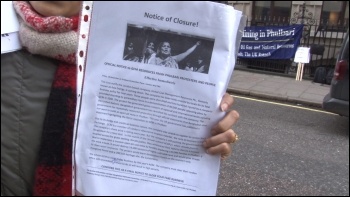
OFFICIAL NOTICE to GCM RESORUCES FROM PHULBARI PROTESTERS AND PEOPLE

Effective Immediately

Phulbari Solidarity Group Founder read out a Notice of closure to GCM at the demo on Friday Photo by Pete Mason

Friday, 18 December 2015, at 10:30am|4 Hamilton Place | London W1J 7BQ

This is to notify the London-based company, Global Coal Management Resources Plc., formerly known as Asia Energy, is coming down. The company has been hotly resisted by locals for its fatal business policy for nine years. Three people were shot dead and two hundred injured by company-provoked shooting by paramilitary force in a demonstration of 80,000 people opposing plans by GCM in 2006.

The project has generated grave concern at national and international levels including the United Nations. Bangladesh government has cancelled the contract with the company. The government has repeatedly reassured protesters by official statements that Bangladesh does not want to build open pit mine in Phulbari. This year the UK government has published a statement highlighting the fierce opposition to GCM in Phulbari.

Due to its dodgy and unethical nature of business, the company was unable to register to London Stock Exchange. GCM is a member of London’s Alternative Investors Market. We note its business is dire. The company’s share price is falling every year. But the company is still pushing the government of Bangladesh for a fatal deal.

In the month of the climate summit #COP21, when climate protests erupted across the globe seeking climate justice, they announced AGM to discuss a noxious deal to implement a massive open-pit coal mine by forcibly displacing 130,000 families in Phulbari. If the mine is built, it would destroy 14,600 hectares of highly cultivable land and would pose threats to clean water resources. The project would leave devastating impact on the country’s only mangrove forest and a UNESCO heritage site, the Sundarbans.

We advise GCM to close dodgy business by this year’s AGM. The company must clear their London office with immediate. Failure to do so will result in high penalty.

CONSIDER THIS AS A FINAL NOTICE TO CLOSE YOUR FAKE BUSINESS!

For further information contact: Bangladesh National Committee, UK branch http://protectbdresources.org.uk, http://www.ncbd.org and Phulbari Solidarity Group: https://phulbarisolidaritygroup.wordpress.com/

Cliamte change protesters outside the AGM of GCM Resources demonstrate on Firday 18 December 2015 DSC_0240 (2)

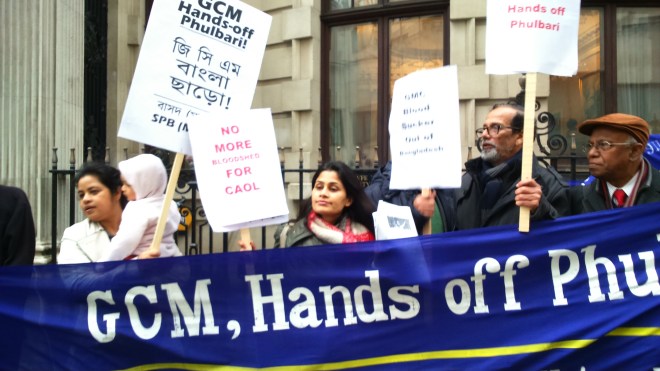
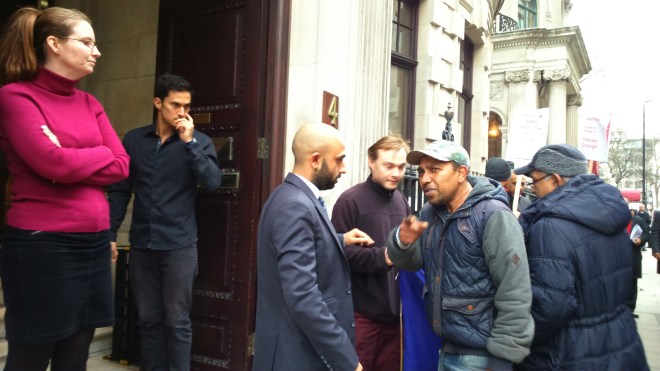
On Friday 18 December 2015, the above notice of closure was served to an AIM-listed British mining company by Bangladeshi community and transnational campaigners to save Phulbari and the green land in northwest Bangladesh. After a successful noise-demo outside the company’s Annual General Meeting, the founder of the Phulbari SolidarityGroup and an eye witness to the carnage in Phulbari on 26 August, 2006, Rumana Hashem has read out the Notice of Closure on behalf of all protesters.

The demo organised by Phulbari SOlidarity Group and the UK branch of Bangladesh National Committee was participated by community women and men, and transnational climate change activists.

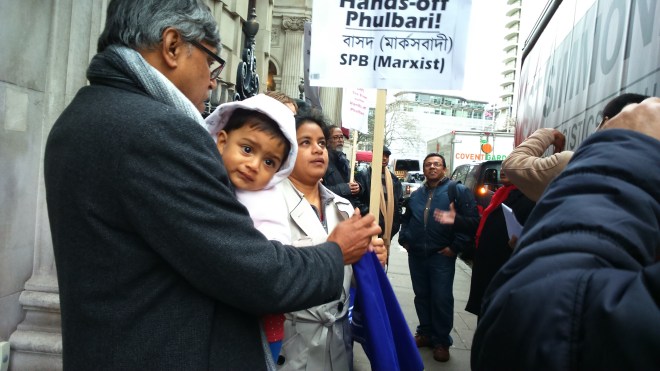
Community women from Dinajpur and Phulbari joined the demo with their children as young as 11 months old.  They chanted slogans, banged spoons and played noisy flute to disrupt the Mayfair AGM of Global Coal Management. They said that GCM has no place in Bangladesh.

DSC_0260 (2)

Little Usha holds placard with his grand dad and mum from who came from Dinajpur to serve a notice of closure to GCM. Photo: Rumana Hashem

In the end of the demo the above notice of closure was served to GCM, which was handed into the board by their dissident shareholders who attended the AGM and questioned the company’s board about the social, economic and environmental impacts of the proposed Phulbari coal project. The dissident shareholders were greeted by other shareholders for raising important and timely questions. The board was clearly embarrassed when the Bangladeshi activists challenged the validity of the suspended contract with Bangladesh government.

Transnational advocates for climate change joined the demo with community activists. Indian anti-mining campaigner and the founder of Foil Vedanta, the activists from the London Mining Networks, leaders of the Socialist Party and the Tower Hamlet’s Trade Unionists and Socialist Coalition stood in full solidarity with the Phulbari activists and community environmentalists. Three representatives of the protesters walked into the AGM and questioned the chair of the company about illegal share business, and workers injuries in the shooting on 26 August in 2006.

DSC_0252 (2)

Protesters took over the entrance to block the investors which led to an argument with the company security personnel who tried to protect the company executives. Photo: Rumana Hashem

Protesters said that this year’s AGM would be GCM’s last ever meeting in London. In a notice of closure, they denounced the company as a fraudulent corporation that does not have any valid contract with Bangladeshi government. The company does not hold any other valid business elsewhere in the globe but they are selling shares in London’s alternative investors’ market. The protesters called upon Michael Tang and Gary Lye to close GCM’s London office without delay. The protesters and the Bangladeshi community activists would lock the company’s head office at Piccadilly in June 2016, otherwise, they said.

Watch video of the demo , with thanks to Socialist Party of England and Wales:  https://www.youtube.com/watch?v=fhxPY8LFPxA&feature=youtu.be

A detailed report of the interrogation inside the AGM is here: GCM Withering and Wilting [http://londonminingnetwork.org/2015/12/gcm-withering-and-wilting/]

Photos of the demo can be accessed via Peter Marshall’s London Diary on Phulbari: http://mylondondiary.co.uk/2015/12/dec.htm#phulbari

More photos and video links can be accessed via Facebook Action-demo event page: https://www.facebook.com/events/180360322310156/

Further press coverage can be accessed via below links:

Protest in London against Phulbari coal mine: http://en.prothom-alo.com/bangladesh/news/89367/Protest-in-London-against-Phulbari-coal-mine

Protesters fight coal mining project in Bangladesh: http://www.socialistparty.org.uk/articles/21925/20-12-2015/protesters-fight-coal-mining-project-in-bangladesh

GCM IS COMING DOWN!

Action Demo in London to Save PHULBARI & Green-Farm Land

Friday, 18 December at 10:30am, 4 Hamilton Place,  London W1J 7BQ (nearest tube station Hyde Park Corner)

In the month of the climate summit #COP21, when climate protests erupted across the globe seeking climate justice, a London-based AIM-listed multinational company, Global Coal Management Resources Plc. , announced its AGM to discuss a noxious deal to implement a massive open-pit coal mine by forcibly displacing 130,000 families of farmers in Phulbari. If the mine is built, it would destroy 14,600 hectares of highly cultivable land in northwest Bangladesh. It would also pose threats to clean water resources and would leave devastating impact on one of the world’s largest mangrove forests and UNESCO heritage site, the Sundarbans.

Phulbari outburst on 26 August 2006

The mothers and wives of murdered villagers in Phulbari calling the investors of Asia Energy (now GCM) after the shooting on 27 August in 2006.

The company, previously known as Asia Energy, has been hotly resisted by locals for its fatal business policy. Three people were shot dead and two hundred injured in a demonstration of 80,000 people that took place in opposition to plans by GCM in 2006. Bangladesh government has cancelled all contracts with the company nine years ago. The government has recently reassured protestors by a statement that it does not want to build an open pit mine in Phulbari. The project has generated grave concern at national and international levels including the United Nations. This year the UK government has published a statement highlighting the fierce opposition to GCM in Phulbari. But the company has so far ignored every message. It has been pushing the government of Bangladesh for a fatal deal. We advise GCM to close business NOW!

JOIN US inside and outside the AGM! We will warn them to close AGM forever!

RSVP to join us via https://www.facebook.com/events/180360322310156/

Please Bring along your banner, placards, festoons, whistles, drums, masks and messages against dirty coal miners. We will declare a notice of closure to GCM and we’ll celebrate the news that Bangladesh government has reassured there is no plan to open pit mine.

Contact for further information: Dr Akhter S Khan: nationalcommittee.uk@googlemail.com, Dr Mokhlesur Rahman qmr111@hotmail.com, Rumana Hashem: phulbarisolidaritygroup@gmail.com

Bangladesh National Committee, UK branch| Phulbari Solidarity Group, UK| 

UK Government Highlights Powerful Opposition to GCM’s Destructive Plan for Bangladesh Coal Mine

Victory of Phulbari Once Again!

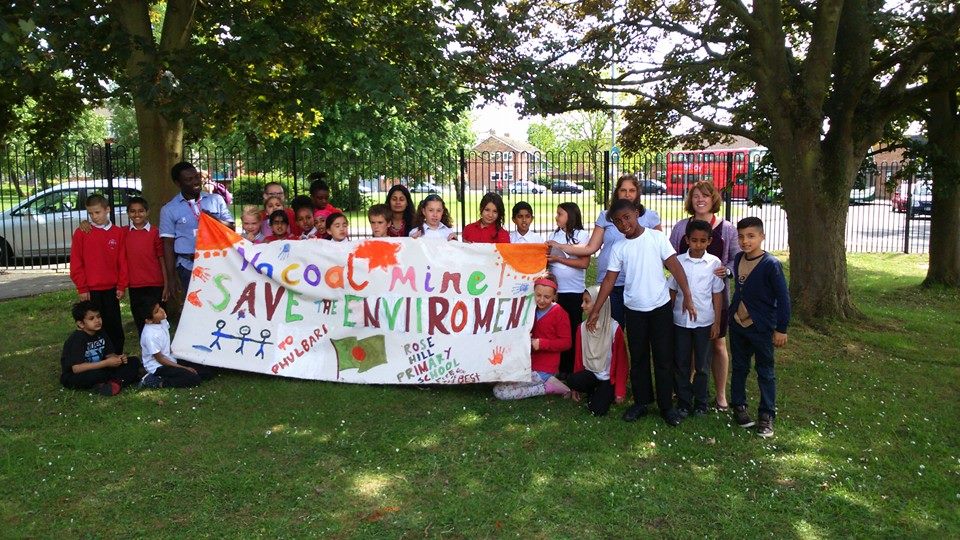
Pupils at Oxford's Rose Hill Primary School painted banner against open cast mine to express solidarity with Phulbari people . 18 June 2015. Photo: Andy Edwards

Pupils at Oxford’s Rose Hill Primary School painted banner against open cast mine to express solidarity with Phulbari people . 18 June 2015. Photo: Andy Edwards

The UK government has published a statement yesterday that highlights the fierce opposition to British company GCM Resources’ plans for a massive open cast coal mine in Phulbari, north-west Bangladesh. The statement notes that protestors are “calling strikes, blockading roads and occupying the company’s local offices”.

The statement by the UK National Contact Point also expresses “regret” that the company had failed to update its plans or produce a human rights impact assessment for the project, as recommended in the findings of its investigation under the OECD Guidelines on Multinational Enterprises in November 2014.

The AIM-listed British corporation GCM Resources Plc.’s planned coal mine in Phulbari has provoked repeated protests by local people and communities for nearly a decade. Three people were killed and more than 200 were injured when paramilitary officers opened fire on a demonstration against the project in 2006. Even so, powerful protests by resilient communities in 2013 and 2014 forced the company’s notorious CEO, Gary Lye, to abandon visits to the area.

Campaigners in Bangladesh are clear that any moves by the company to enter Phulbari would provoke further protests.

The UK government’s investigation has followed a complaint submitted by the Global Justice Now and International Accountability Project in 2012. It has condemned the company for breaching international guidelines on ethical corporate behaviour, stating that the project “has aroused considerable opposition in Bangladesh, leading to violent protests, and an even more violent response by the authorities there”.

Yesterday’s statement also notes recent statements from ministers and officials at the Bangladesh Government’s Power, Energy and Mineral Resources Division that GCM does not have a valid contract with the Government of Bangladesh, and that the Government of Bangladesh has no intention for open cast coal extraction to take place in the region, which includes some of the country’s best agricultural land. These statements follow demands made by protesters against the project that the Bangladesh government should ban open cast mining and remove GCM from the country.

Christine Haigh, campaigner at the Global Justice Now, said:

Today’s statement is further evidence that the Phulbari coal mine cannot go ahead. If it does, it will be a human rights disaster. Local people have repeatedly made it clear that they don’t want it and any moves by GCM to move this project forward will be met by further resistance.”

She added: While GCM are claiming this report vindicates them, in reality it does anything but. The main problem is the inability of the British government to enforce human rights standards on companies like GCM, leaving people affected by British companies around the world with no right to legal redress for the injustices they face. This must change.

Rumana Hashem, the founder of Phulbari Solidarity Group and an eye witness to the 2006 shooting in Phulbari, stated:

It is good that the UK government has eventually recognised that GCM has failed to develop appropriate communication with the communities in Phulbari. It was a mistake for the NCP to take this long to understand the power of people. They have previously undermined the powerful opposition that exists and that has made possible a halt to the detrimental project of the British company.

Rumana added: I have seen how resilient the movement is in Phulbari. Bangladesh government has expressed solidarity with the community’s view and said ‘no to GCM’. GCM must forget this project. It is reassuring that UK government has recognised that local people will not give in. They will fight for their land until last breath.

The mine would force up to 220,000 people from their land, destroying their homes and livelihoods, and would threaten the Sundarbans – one of the world’s largest remaining mangrove forests and a UNESCO World Heritage site.

The UK government states that GCM must take into account the UN Declaration on the Rights of Indigenous Peoples, which stipulates that no developments can take place on indigenous peoples’ land without their ‘free, prior and informed consent’. Bangladesh’s National Indigenous Union says the mine would displace or impoverish 50,000 indigenous people from 23 villages

Seven UN human rights experts have called for an immediate halt to the project, citing threats to fundamental human rights, including the rights to water, food, adequate housing, freedom from extreme poverty and the rights of indigenous peoples.

Read Press Release by Global Justice Now here: http://www.globaljustice.org.uk/news/2015/sep/10/uk-government-highlights-community-opposition-gcm-resources-plan-bangladesh-coal

Homage paid to Brave Protesters in Phulbari

By Raaj Manik

It was Phulbari Day on Thursday. It was the day to commemorate mass protests that prevented a UK-based mining company, Global Coal Management PLC, from building a large-scale open-pit coal mine in Phulbari in north-west Bangladesh. Nine years ago, on 26th August in 2006, three brave protesters were shot dead in the mass protest that took place in opposition to plans by GCM, a London based AIM-listed corporation, who wanted to forcefully displace 130,000 people from their homes by grabbing 14,600 hectares of highly cultivable land in Bangladesh. The powerful demonstration in 2006 ended in tragedy when paramilitary force opened fire on a rally of 80,000, people, leaving three people killed and two hundred injured.

The 26th August has been marked as a day for commemorating the protesters in Phulbari since then. On the ninth anniversary on 26 August 2015, the day was remembered with respect, as ever, and people’s resistance was celebrated by diverse groups and rights-activists across Bangladesh and in London. In Bangladesh, campaigners of National Committee at Phulbari, Dhaka, Narayanganj, and several other regions were joined by many other human rights and art groups who paid homage to Phulbari protesters.
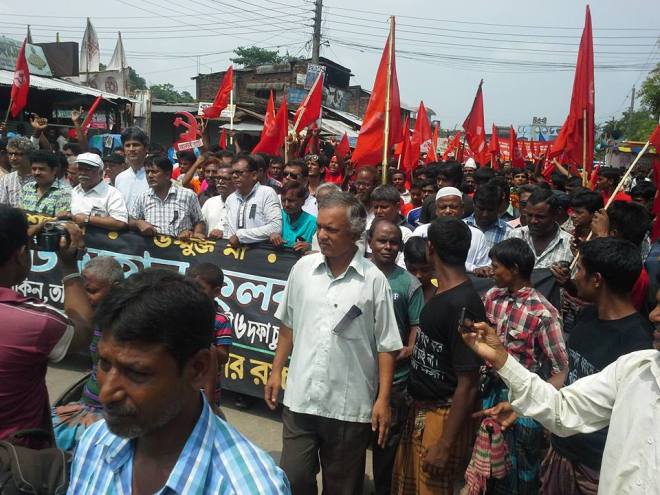
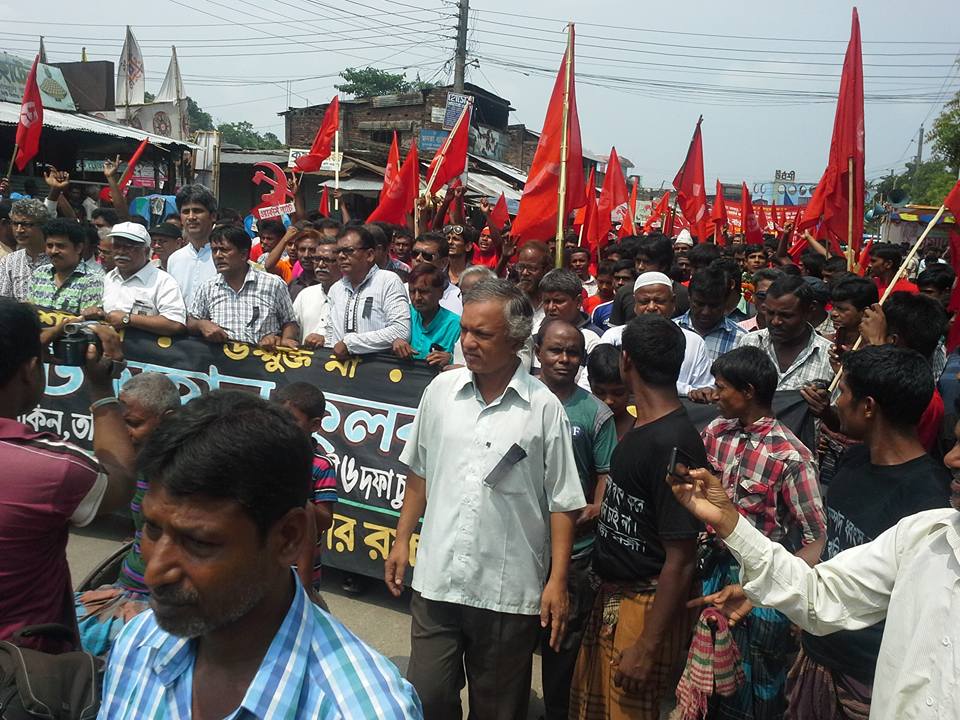
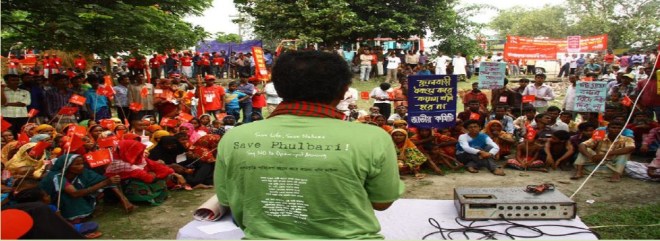
Rally in Phulbari on 26 August 2015 . Photo credit: Anonymous

Rally in Phulbari on 26 August 2015 . Photo credit: Anonymous

In Phulbari, nearly ten thousands of people have paid tribute to Al-Amin, Salekin and Tariqul – the three innocent civilians killed by GCM-provoked shooting in 2006. People have started to gather in the town as early as seven o’clock in the morning to pay homage to those who died that day and to celebrate the people-powered resistance that has prevented the massive mine being built for almost a decade. Schools, colleges, shops and business enterprises were shut for all day in tribute to those brave protesters who forced the British coal miners to leave Bangladesh. The procession of homage, initiated by the Phulbari branch of National Committee, was joined by farmers, agricultural workers, rickshaw-drivers, van-store employees, school teachers, doctors, medical students, professionals, art-activists, business entrepreneurs, and of course local leaders of political parties. Parents of the dead, Al-Amin and Salekin, and the injured men including Bablu Roy and Pradip attended the rally in the town centre.
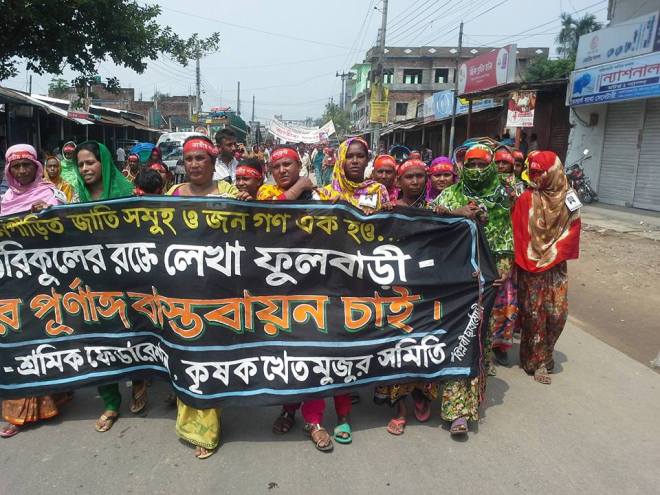
Families of the victims and women protesters march towards Shahid Minar in Phulbari to pay tribute. 26 August 2015. Photo: Anonymous

Families of the victims and women protesters march towards Shahid Minar in Phulbari to pay tribute. 26 August 2015. Photo: Anonymous

Locals in Phulbari called upon the government to remove fabricated cases against leaders of the Phulbari movement. They demanded for an immediate implementation of the Phulbari deal and called upon a permanent expulsion of Asia Energy, the Bangladesh subsidiary of GCM , from Bangladesh. Activists have also asked government to compensate the affected people in Borapukuria mine. Leaders of National Committee announced fresh programme to be held later this year against government’s destructive policy of coal-powered plant in other parts of the country. The rally called upon the government to implement the 7-point demands of the National Committee and to prevent Rampal coal-fired power project from happening which would destroy the countries only mangrove forest and a UNESCO heritage, the Sundarbans. They demanded that Orion coal-fired plant must be resisted and suspended immediately.

The same demands were projected in the tribute to Phulbari resistance in other parts of the country, and in East London. In London, members of the UK branch of the Bangladesh National Committee to Protect Oil, Gas, Mineral Resources, Power and Ports, and activists of Phulbari Solidarity Group were joined by transnational campaigners and environmentalists from Global Justice Now, UNISON, and the Socialist Party of England and Wales. Messages of support and solidarity were delivered by representatives from Tamil Solidarity, National Trade Union and London Mining Network, also.

In the meeting at the Montefiore Centre in East London transnational activists have taken a pledge to resist all sorts of conspiracy for coal-fired power in Bangladesh. The member secretary of the committee in the UK, Dr Akhter Sobhan Khan, has updated the forum about development in Bangladesh. That Bangladeshi government has eventually recognised that due to the high population density and the fact that much of the local economy is based on agriculture and other land-based livelihoods, open cast mining is not a viable project for Bangladesh. The forum welcomed this news of a recent statement by Bangladesh’s state minister for power, energy and mineral resources, Nasrul Hamid that the government does not want to use open pit mining in the region.
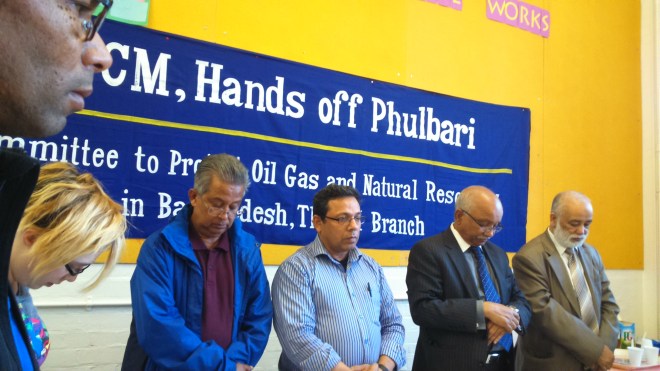
Tribute to Phulbari protesters paid in London by following silence. Photo credit: Rumana Hashem

Tribute to Phulbari protesters paid in London by following silence. 26 August 2015. Photo credit: Rumana Hashem

The meeting, presided by Dr Mukhlesur Rahman, has started by following one minute silence in the honour of Al-Amin, Salekin and Tariqul. Participants have discussed recent developments in the campaign against the mine. The Chair of the meeting has updated the forum about the invalid contract between the government and the company.

The founder of Phulbari Solidarity Group and an eye witness to the shooting in Phulbari, Dr Rumana Hashem, gave her eye witness to the tragic event and the deadly shootings. She described how local women and men had made the company to leave the area. She noted that locals are still vocal against the mine as they recognised that the mine, if built, would cause mass evictions and destroy thousands of hecters of farmland in an area that forms part of the country’s breadbasket. Rumana’s statement was followed by speeches by comrades such as Dr Jinnah, comrade Moktar, Mostofa Kamal, Ishak Kajol and several others.

Christine Hague, who joined the meeting to represent Global Justice UK, then delivered a message of solidarity from Global Justice Now, in which she said that Global Justice Now has been supporting the campaign against the mine since 2008. They have been putting pressure on investors, which saw Barclays and RBS withdraw their support, exposing the UK government’s support for GCM and joining protests at the company’s AGM each year. They have also supported US-based International Accountability Project to submit a complaint to the UK National Contact Point for the OECD Guidelines on Multinational Enterprises, in the hope of using this mechanism to hold GCM to account.

Although the complaint was accepted for investigation, the UK NCP failed shamefully to consider the impacts of the project should it go ahead, focusing only on the company’s actions in the planning stage to date. GCM was still found to have failed to “foster confidence and trust” in the local community though it was otherwise let off the hook with a recommendation that it update its plans and carry out a human rights impact assessment. This is, as colleagues in Bangladesh noted, likely to lead further unrest. In fact, within four days of the publication of the final statement on the complaint, a visit by GCM’s CEO, Gary Lye, to the area triggered three days of protests and strikes, including an occupation of GCM’s offices in Phulbari.
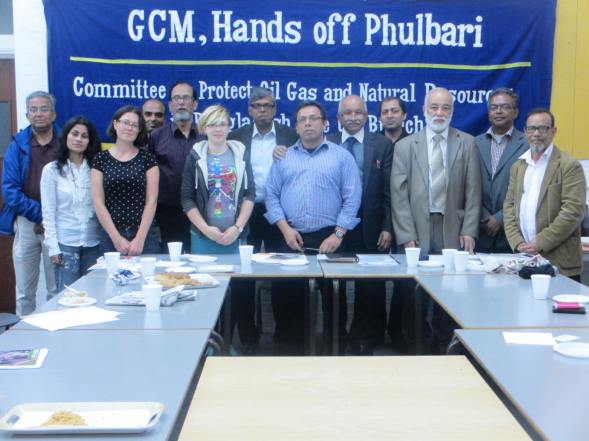
Part of the London gathering on 26 August 2015. Photo credit Zahanara Rahman

Part of the London gathering on 26 August 2015. Photo credit Zahanara Rahman

But the failure of high level international mechanisms like this made Thursday’s gatherings in recognition of the mass resistance to the project of Phulbari ever more important. A representative from UNISON, Hugo Piere, told the forum that UNISON would be proud to be part of any campaign or action that the community takes against GCM in future. A full-solidarity has been expressed by both UNISON and the Socialist Party of England and Wales.

Likewise, Isai Pryia from National Trade Union and Tamili Solidarity has sent message of solidarity. The message which Helen Pattison of Socialist Party delivered to the gathering states: ‘Although, unfortunately, Tamil Solidarity couldn’t make the meeting today we stand in solidarity with you. We remember the dead and fight for the living. We hope that we will be able to work more closely together in the future’.
Activists take pledge to stand with Phulbari people. 26 August 2015. Photo credit: Rumana Hashem

Activists take pledge to stand with Phulbari people. 26 August 2015. Photo credit: Rumana Hashem

The meeting has ended with a pledge that any attempt to implement coal-fired plant in Bangladesh will be resisted and solar energy should be promoted. People in both Bangladesh and London have acknowledged that despite the tragedy, people in Phulbari have made an example by preventing the devastating project from happening for almost a decade. It is solid people power. And that’s definitely worth celebrating.

But sadly, the news of celebration and commemoration in Phulbari remains under-covered in mainstream media. Professor Anu Muhammad, the member secretary of National Committee and a leading economist in Bangladesh stated: ‘while the significance of Phulbari resistance has been recognised by national and international environmentalists, with the exception of a few newspapers mainstream media has ignored the news of Phulbari Day.’

The fight for people’s right, nature and environment must move forward. Activists in London have now decided to hold a symbolic protest this September when the Bangladesh’s Energy Advisor Toufiq Elahi visits London.

Phulbari Solidarity Group Joined Global Demo against Vedanta in London

Vedanta demo 2On 3rd August 2015, the world has witnessed another successful year of global actions against notorious mining company Vedanta. Monday’s eight global protests against Vedanta was a very successful day in London and around India and Afrika. The London AGM of Vedanta 2015 was disturbed by the drumming and chanting outside and questions about pollution in Zambia, illegal mining in Goa, and workers injuries in Tuticorin asked by dissident shareholders.

Photo credit: Rumana Hashem

Phulbari Solidarity Group has shown its full solidarity to Foil Vedanta and global protesters against notorious Vedanta. The founder and coordinator of Phulbari Solidarity Group, Rumana Hashem, joined the noise demo at Ironmongers Hall in London, which turned out as a very successful day in London.

Full coverage, pictures, and a video of the demo can be found on Foil Vedanta website. The press coverage linked below: http://www.foilvedanta.org/uncategorized/eight-global-demos-against-vedanta-in-afrika-india-and-london/
Further coverage, pictures, and a video of the demo can be found below:

http://odishachannel.com/index.php/4956/angry-protests-held-against-vedanta-in-india-africa-and-london/

http://newint.org/blog/2015/08/04/global-protests-oppose-vedanta-mining-exploitation/

http://economictimes.indiatimes.com/news/international/business/protests-at-vedanta-group-agm-in-london/articleshow/48335484.cms

https://www.lusakatimes.com/2015/08/04/parallel-protests-carried-out-in-india-zambia-and-u-k-against-vedanta/

http://www.demotix.com/news/8246721/activists-protest-vedantas-annual-general-meeting-london#media-8248112

http://www.demotix.com/news/8247682/foil-vedanta-london-protest-mining-giants-agm#media-8247581

http://www.demotix.com/news/8243417/protesters-picket-vedanta-agm-london-ongoing-toxic-leaks-dispute#media-8245906

http://www.thehindubusinessline.com/companies/vedanta-resources-agm-day-marked-by-protests/article7495270.ece