We Call on the World Heritage Committee to Intervene to Stop Bangladesh’s Government from Pushing the Sundarbans Towards Destruction

The Bengal Tiger in River Pashur at the Sundarbans on 26 July 2016. Courtesy: Anonymous photographer, NCBD.

In the light of ongoing threats on the world’s largest mangrove forest, the Sundarbans, located at the Indian-Bangladeshi border, we write to the country delegates to the 43rd Session of the UNESCO World Heritage Committee by calling for an urgent intervention into Bangladesh government’s decision to implement the destructive Rampal coal power-plant.


As concerned global citizens, earth defenders, climate organisations and researchers, and members of Bangladeshi environmental groups abroad, we express our unequivocal support to the draft decision generated by international biodiversity experts and to be discussed and voted in Baku on 4 July 2019. We welcome the draft decision that calls in particular to halt the construction of the coal plants at Rampal, Taltali and Kalapara and 154 other active industrial activities in southwest Bangladesh until the exact impacts for the forest have been critically assessed.


The Sundarbans mangrove forest is an invaluable ecosystem along Bangladesh’s coast and the government of Bangladesh should take responsibility to protect the mangrove site. Ahead of the 43rd Session in Baku where 21 member states on the Committee will discuss the status of the Sundarbans forest, we caution also that declaring it a “World Heritage Site in Danger” will not suffice. This will be a first step only. We recognise the imminent danger threatening the mangrove forest, where such a decision is needed. However, the Committee should take a more bold and positive step to bring in a solution to the problem faced by the affected communities and the World Heritage.


The outcome of such declaration should not mean that the World’s largest mangrove forest being an isolated or left over site, diminishing its original status. In our view the World Heritage Committee should take an important and positive step by first declaring the Sundarbans as a “Heritage in Danger” and asking the Bangladesh government to immediately comply with UNESCO guidelines for the protection and conservation of this universal common heritage. The Committee should ask the government to ensure that the mangrove being not harmed in the future. This could be done by consistent monitoring of the activities across the site, which the government should be accountable for.


The Committee could also ask the government to follow the Alternative Power and Energy Plan for Bangladesh, crafted by the energy experts belonging to the Save the Sundarbans movement that articulate that it is possible to generate up to 91,700 MW of electricity through renewable sources.


The government in Bangladesh do not recognise the cost of fossil fuel and harms done by ongoing industrial developments in the vicinity of Sundarbans. There are significant evidence of ongoing dredging and construction in the vicinity of the Sundarbans that overlooked appropriate measures to limit water and soil pollution. Despite thorough critiques by national and international climate experts and scientists, industrial projects near this intricate ecosystem continue. This situation is saddening.


Thus we call on the Country Delegates to the World Heritage Committee to immediately:


  1. Declare the site as a “Heritage in Danger” and take positive steps to save the Sundarbans;
  2. Ask Bangladesh government to withdraw from the move to build coal-power plants near the Sundarbans;
  3. To reiterate that it is the government’s responsibility to protect mangrove forests and to comply with the UNESCO World Heritage recommendations as elaborated in the draft decision;
  4. Tell Bangladesh government to overhaul all industrial installations of destructive enterprises in the area;
  5. To consult the Alternative Power and Energy Plan for Bangladesh as a way forward for meeting energy needs of the country.


Sincerely,


We the undersigned:*


  1. Akhter Sobhan Khan Masroor, Committee to Protect Natural Resources of Bangladesh, the UK branch.
  2. Alfredo Quarto, Mangrove Action Project, USA.
  3. Amrit Wilson, South Asia Solidarity Group, London.
  4. Amy Caitlin, Extinction Rebellion London, UK.
  5. Anna Gaynutdinova, ICOMOS Russia Board member.
  6. Andrea Martínez-Fernández, World Heritage Office of San Antonio (US/ICOMOS Int´l Exchange Intern), Texas.
  7. Anna Fisk, Extinction Rebellion Scotland.
  8. Delphine Djiraibe, Public Interest Law Centre, TCHAD, North-central Afrika.
  9. Danielle DeLuca, Cultural Survival, USA.
  10. Dominique Palmer, Extinction Rebellion Youth, London.
  11. Elena Belokurova, German-Russian Exchange St. Petersburg.
  12. Eman Shokry Hesham, The World Heritage Watch.
  13. Environics R. Sreedhar, Environics Trust, India.
  14. Ercan Ayboga, Initiative to Keep Hasankeyf Alive and Platform No to the Destruction of Sur, Turkey.
  15. Esther Stanford-Xosei, Coordinator-General, Stop The Maangamizi:We Charge Genocide/Ecocide Campaign.
  16. Eugene Simonov, Coordinator, Rivers without Boundaries International Coalition.
  17. Farwiza Farhan, Chairperson, Yayasan HAkA, Indonesia.
  18. Fe Haslam, Global Justice Forum
  19. Geoff Law AM, Wilderness Society, Australia.
  20. Gunter Wippel, MENSCHENRECHTE (HUMAN RIGHTS) 3000 e.V., Germany.
  21. Humaida Abdulghafoor, Save Maldives Campaign, Maldives.
  22. Jessica Lawrence, Earthjustice, USA.
  23. Dr Kat Kramer, Christian Aid, UK.
  24. Kofi Mawuli Klu, Joint Coordinator, Extinction Rebellion Internationalist Solidarity Network (XRISN), London, UK.
  25. Knud Voecking, Urgewald, Germany.
  26. Luiz Fernando Vieira, Coordinator, The Breton Woods Project, Critical Voices on the World Bank and IMF, UK.
  27. Marion Hammerl, Global Nature Fund
  28. Mikhail Kreyndlin, Greenpeace Russia.
  29. Maurizio Farhan Ferrari, Forest Peoples Programme, UK.
  30. Mª Alejandra Piazzolla Ramírez, Extinction Rebellion Youth, Bristol,
  31. Melody Lepine, Mikisew Cree First Nation.
  32. Mostafa Farook, European Branch of National Committee to Protect Oil, Gas, Mineral Resources, Power and Port in Bangladesh.
  33. Nils Agger, Risingup! UK.
  34. Norly Mercado, Asia Regional Director, 350.Org.
  35. Paul V. Dudman, Refugee Council Archive, University of East London.
  36. Peter Tatchell, Director, Peter Tatchell Foundation.
  37. Pieter Jansen, Both ENDS.
  38. Richard Hering, Extinction Rebellion London.
  39. Richard Roberts, Reclaim the Power ‘Frack Free Three’, London, UK.
  40. Richard Solly, London Mining Network, UK.
  41. Rohit Prajapati, Paryavaran Suraksha Samiti Gujarat, India.
  42. Dr Rafiqul Hassan Khan (Jinnah),President, Rivers Saving Network UK
  43. Rumana Hashem, Coordinator, Phulbari Solidarity Group.
  44. Saeed Baloch, Pakistan Fisherfolk Forum, Pakistan.
  45. Salman Khairalla,Director,Tigris River Protector Association (Humat Dijlah), Iraq.
  46. Syed Babul, Bengalische Kulture Forum, Germany.
  47. Sukhgerel Dugersuren, Oyu Tolgoi Watch, Mongolia.
  48. Stephan Doempke, Chairman, World Heritage Watch, Germany.
  49. Stephanie Fried, Ulu Foundation, USA
  50. Sergiu Musteata, ICOMOS Moldova
  51. Virginia Young, Australian Rainforest Conservation Society
  52. Vidya Dinker, Indian Social Action Forum (INSAF)
  53. Yulia Naberezhnaya, Russian Geographical Society, Member of the World Commission on Protected Areas in the North Eurasia Region. Russia.


*Names of signatories on this list are re-organised around the alphabetical order of ‘First names’. There is no first or second signatory. All signatories share the same sentiment, equally.  The signatories are the spokespersons of organisations that they represent in the letter above. The signatures close here.
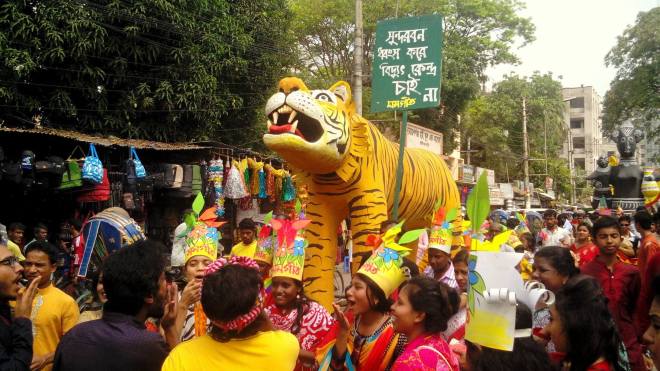
 

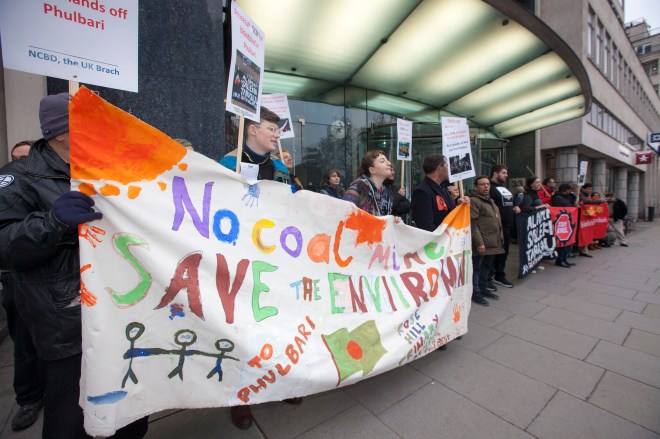
A rally with handmade dummy of rare Bengal Tiger was brought about by the rural green-cultural activists at Samageet to Save the Sundarbans in Narsingdhi, Bangladesh (14 April 2016). The Bengal Tigers are decreasing by ongoing dredging in the area and they would gradually disappear if building of coal plants continue around Rampal. File photo. Photocredit: Anonymous PSG activist.

#SAVESUNDARBANS #NOtoCOALPLANTS #SAVEtheSUNDARBANS
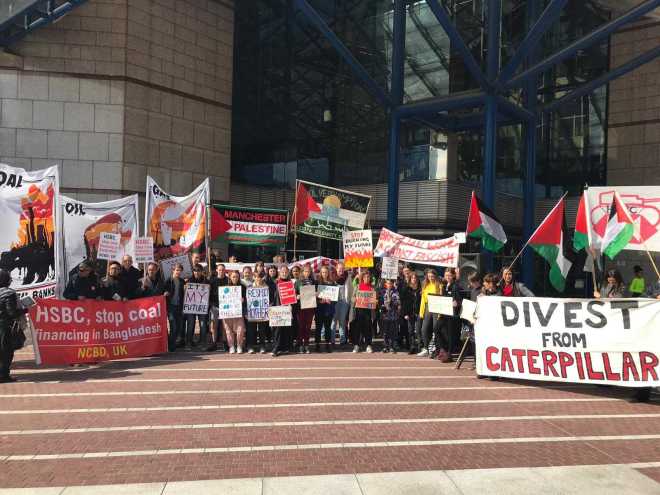
Vibrant Protests Held at HSBC AGM

Protesters Demand that the Bank Stops Fuelling War and Climate Crisis

By Raaj Manik


Last Friday Birmingham witnessed colourful and powerful protests by an alliance of anti-militarism, climate groups and pro-Palestinian rights activists who have joined forces to demand that banking giant HSBC ends its complicity in climate change, military occupation and war.


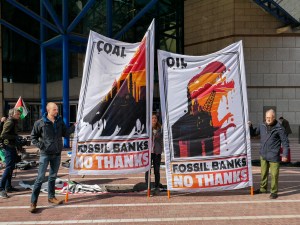
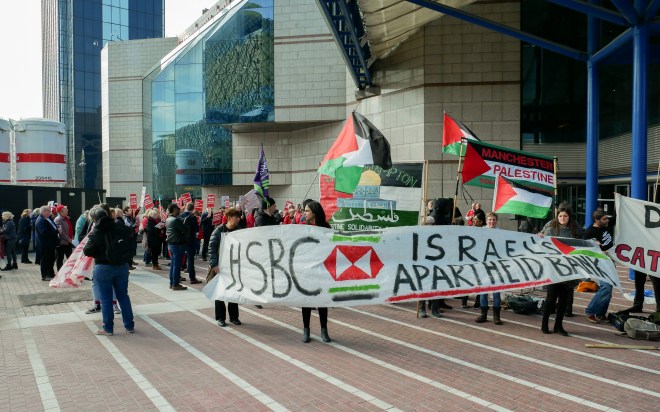
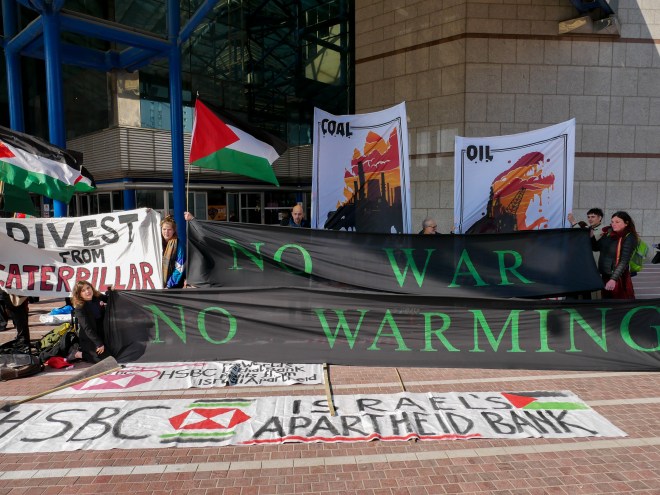
In the morning of 12th April, protesters gathered outside the International Convention Centre at 8 Centenary Square in Birmingham where HSBC’s AGM was being held. Under the slogan “No War, No Warming” a loud group of activists occupied the front entrance of the lavish building to speak out against the bank’s involvement in the climate crisis and militarised conflict around the planet. Activists said that HSBC has poured £43bn into fossil fuels, whilst investing over £830m in arms companies in the last three years alone. They accused the bank being involved in syndicated loans to the arms sector exceeding £18.9bn.


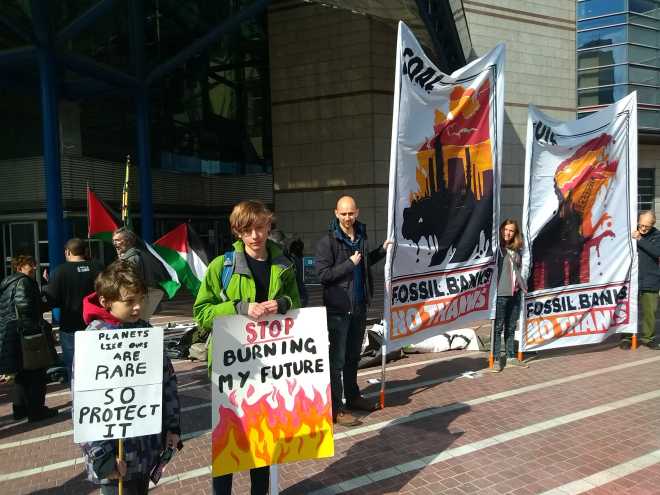
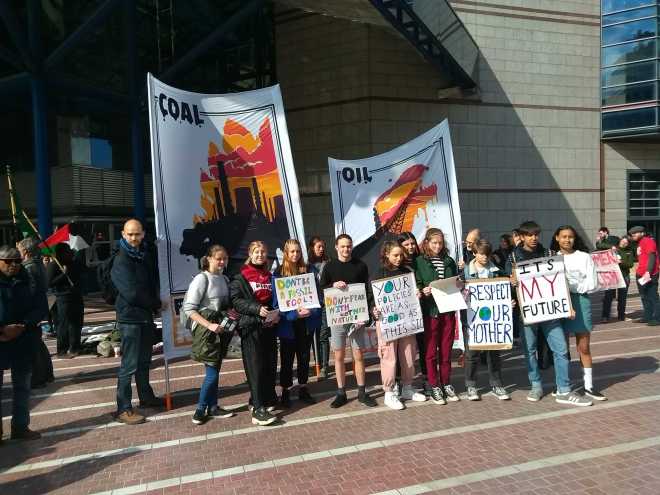
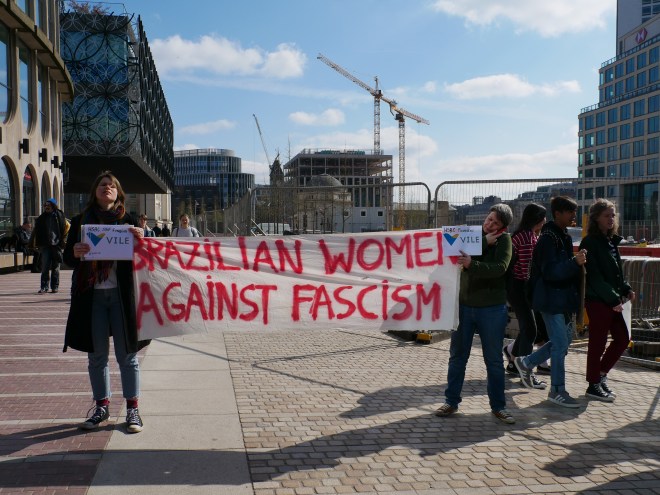
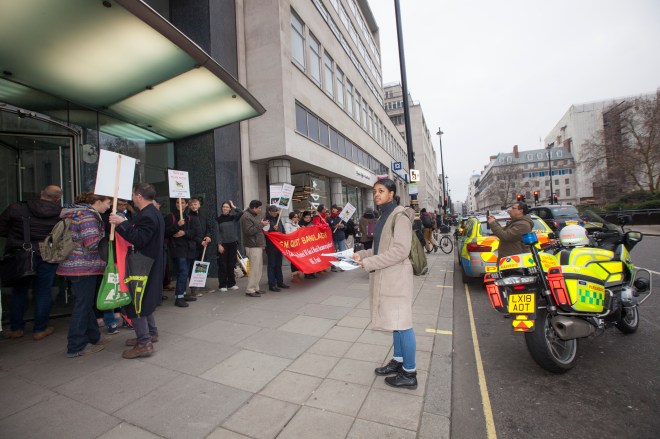
Protests outside HSBC AGM was held in Birmingham on 12 April 2019

There have already been campaigning successes, with anti-militarism and pro-Palestinian rights groups pushing HSBC to divest from Israel’s biggest arms manufacturer, Elbit Systems, last December and climate groups winning tighter restrictions on the bank’s coal policy last April though, protesters say that HSBC’s policies, lending practices and exposure give cause for an escalation in action and demands.


Lise Masson, a climate campaigner at BankTrack said: “For too long now big banks like HSBC have been pouring billions into climate-wrecking fossil fuels every year. HSBC is one of the biggest fossil fuel financiers, supporting projects that not only damage our climate but also ravage frontline communities across the world. HSBC needs to massively step up its climate ambition, concretely that means ending its financial support for all fossil fuels.”


Huda Ammori, Campaigns Officer at Palestine Solidarity Campaign, stated that: “Despite divesting from Elbit Systems following campaigning pressure, HSBC continues to invest in companies supplying weapons and military technology to Israel such as Caterpillar, which makes the armoured bulldozers used to demolish Palestinian homes and communities. Our message today is clear – HSBC must end its complicity in war crimes and military occupation, and cut ties with all companies that profit from the violent repression of the Palestinian people.”


Protests outside HSBC AGM was held in Birmingham on Friday 12 April 2019.

As research shows that a heating climate has been a contributing factor behind wars in the Middle East, protesters assert that a cycle of war and warming increasingly binds anti-militarism and climate campaigners to the same cause. The groups highlight that in Nigeria, Syria, Iraq and elsewhere, oil, gas and coal are being pulled from the ground under the watchful gaze of state-military and militias.


HSBC also continues to finance new coal-fired power plants in Bangladesh, Vietnam and Indonesia.  All three countries are on the front line of climate change and have significant renewable energy potential, a crucial tool to sustainable poverty eradication.


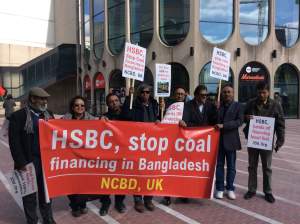
Bangladesh National Committee protest outside HSBC AGM in Birmingham on Friday 12 April 2019

Akhter Khan Masroor, Member Secretary of NCBD, UK said: “Whilst coal mines funded by HSBC destroyed the ecology and livelihoods in Colombia and Russia, HSBC’s new investment in coal business in the Delta region is a threat to livelihoods in Bangladesh, Indonesia and Vietnam. Bangladesh is the most vulnerable country to climate change. As HSBC’s coal financing policy for Bangladesh will push it into more danger, we demand they do not invest in coal in Bangladesh and in the delta region. We do not need dirty coal energy. HSBC must also stop arming the Israeli state that is killing the people of Palestine.”


Protests against HSBC’s financing of war and climate change have been coordinated by groups including 350.org, War on Want, Palestine Solidarity Campaign, BankTrack, and Bangladeshi diaspora groups NCBD UK and Phulbari Solidarity Group. Campaigners say they will continue to lobby and protest against HSBC until it divests fully from the fossil fuel industry and the arms trade.


School strikers protests outside HSBC AGM in Birmingham on Friday 12 April 2019

Previously, climate and anti-militarism groups have challenged HSBC on separate terms, but have now come together in a collective show of force to demand that the bank severs ties with companies that are at the root of war crimes and global warming.


Read further news:

Our house is on fire but its business as usual at the HSBC AGM say the activists who took action to get HSBC to #stopfundingdestruction : http://bit.ly/2IyWXN0 

BDS Victory: HSBC Divests From Elbit
https://waronwant.org/media/bds-victory-hsbc-divests-elbit

HSBC Accused of Hypocrisy for Coal Finance Ban That Excludes Countries Most Vulnerable to Climate Change
https://www.desmog.co.uk/2018/10/16/hsbc-accused-hypocrisy-coal-finance-ban-excludes-countries-most-vulnerable-climate-change

HSBC has recently announced it has appetite to finance coal in Bangladesh and in the delta region, despite research showing that pollution caused by coal expansion in South-East Asia will cause tens of thousands of deaths.

Add your name to the petition with protesters calling on the bank to change its policies with respect to finance for fossil fuel projects and weapon manufacturers: https://350.org/hsbc/#petition 

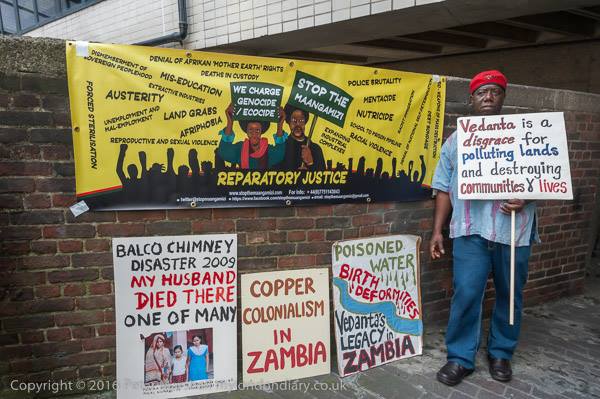
LANDMARK JURISDICTION CASE WON BY ZAMBIAN FARMERS AT SUPREME COURT

PRESS RELEASE by Foil Vedanta

Historic victory opens the door for global claimants to seek justice against British multinationals in the UK


The Supreme Court on Wednesday the 10th April announced its verdict in the landmark case of the Zambian communities consistently polluted by Konkola Copper Mines (KCM), a subsidiary of British miner Vedanta Resources Plc, allowing them to have their case against the parent company and its subsidiary tried in the UK. The ruling sets a strong legal precedent which will allow people with claims against subsidiaries of British multinationals to sue the parent company in the UK.

The judgment by Chief Justice Lady Hale, and four further judges, re-affirms the rulings of the Court of Technology and Construction in 2016 and the Court of Appeal in 2017. Lady Hale refused Vedanta’s pleas in appealing the former judgments stating that, contrary to the claims of Vedanta’s lawyers:

  • the claimants do have a bona fide claim against Vedanta

  • the company does owe a duty of care to the claimants, especially in view of the existence of company wide policies on environment and health and safety.

  • that the size and complexity of the case, and the lack of funding for claimants at ‘at the poorer end of the poverty scale in one of the poorest countries of the world’ means that do not have substantive access to justice in Zambia.

The 1,826 claimants, represented by UK law firm Leigh Day, are from farming and fishing communities downstream of KCM’s mines and plants. They claim to have suffered continual pollution since UK firm Vedanta Resources bought KCM in 2004, including a major incident in 2006 which turned the River Kafue bright blue with copper sulphate and acid, and poisoned water sources for 40,000 people(2). 2,001 claimants took KCM to court in Zambia in 2007. The courts found KCM guilty but denied the communities compensation after a nine year legal battle. As a result the victims took their case to UK lawyers.

James Nyasulu from Chingola, a long term campaigner in the case, and lead claimant in the Zambian cases, issued this statement:

The Supreme Court judgment will finally enable justice for the thousands of victims of pollution by KCM’s mining activities, who have suffered immensely since 2006 to date, in the Chingola district of Zambia. Their livelihoods, land and health have been irreparably damaged by pollution which has rendered the River Kafue completely polluted and unable to support aquatic life. Some have already died as a result.

We are very grateful to the British Supreme Court for allowing the case to be tried in the UK where we trust that justice will finally be done. As our thirteen years of legal battles have shown, we have been unable to get justice in Zambia.”

Now that the Supreme Court has confirmed their permission to have the case tried in the UK the case itself can begin.

Samarendra Das from Foil Vedanta said:

As the UN’s Sustainable Development Goals recognise, sustainable development and access to justice go hand in hand. The judges ruling today recognises and enforces that principle.

Criminal companies like Vedanta can no longer so easily whitewash their reputation and assume a ‘cloak of respectability’ by virtue of a London listing. This is an historic day for victims of British multinational’s abuses worldwide.”

In a further development Vedanta Resources de-listed from the London Stock Exchange on 1st October 2018, amid global protests following the killing of 13 people, shot by police during protests against the company’s copper smelter in Tuticorin, Tamil Nadu, India. Commentators (including Foil Vedanta in their comprehensive report on the company’s global operations entitled ‘Vedanta’s Billions: Regulatory failure, environment and human rights’)1 claimed the company were fleeing regulation in the UK. However, Vedanta remains liable in the UK for damages arising from the Zambian case.

It is now possible that claimants from some of the many of the Indian communities affected by pollution and human rights abuses by Vedanta may also seek to get justice in the UK.

In April 2016 a High Court ruling granted the claimants jurisdiction to have their case against KCM and Vedanta heard in the UK, citing KCM’s uncertain and opaque finances as one reason they may not be able to get justice in Zambia. The Court of Appeal upheld this verdict in July 2017.2(3)

2 Dominic Liswaniso Lungowe and others vs Vedanta Resources Plc and Konkola Copper Mines Plc. (13 Oct, 2017)

Support Three XR Activists at Court – Show Solidarity with Bangladesh

This Wednesday 10th April, Amy, Angela and Shulamit face the City of London Magistrate’s court for defending the affected communities in Phulbari and for disrupting AGM of a bullying extractive company, GCM Resources, in London. Please come to support and show solidarity with the brave activists and with abused Bangladeshi communities.

Wednesday, 10 April 2019 from 09:30-11:30 UTC+01

City of London Magistrate’s court

1 Queen Victoria Street, EC4N 4XY

London, United Kingdom.


The three arrests happened at the AGM for Global Coal Management (GCM) Resources Plc. on 28th December 2019. GCM is an AIM-listed British company whose sole purpose is to build a 6000MW massive open pit coal mine in the only flood protected area in Bangladesh, the Phulbari, in northwest region.

Building the mine will involve displacement of up to 220,000 people including 50,000 indigenous people from 23 tribes, destroying their ancient culture which can be traced back 5,000 years. The mine will drain and pollute the water supply for the 230,000, destroy 14,600 hecters of areas of the most fertile agricultural land in Bangladesh whilst only 6 percent of the coal or profit will remain in the country.

The project will damage the UNESCO world heritage site, the Sundarban Mangroves where the endangered Bengal Tigers live.

Why do corporations hold the power to do this? This is ecocide.

Three people including a 13 year old-child in Phulbari have been killed protesting this mine.  Activists have been abused by the company’s CEO who filed multiple arbitrary cases against 26 community leaders. The company’s Bangladesh subsidiary, Asia Energy, was also allegedly involved in the murder of Nasrin Huq who was fighting the controversial Phulbari coal project.


The courageous Extinction Rebellion activists decided their personal consequences are of less importance than putting their bodies in the way of this criminal activity.


JOIN Us with friends and family outside and inside the court, if you are around London.

If you are not in London, please show your solidarity by sending a message of support on Facebook here: https://www.facebook.com/events/371034560412653/

Stop #GCM Blockade The #Coal Burglars

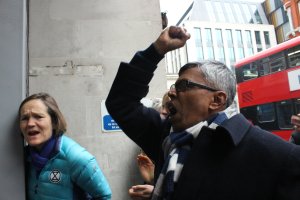
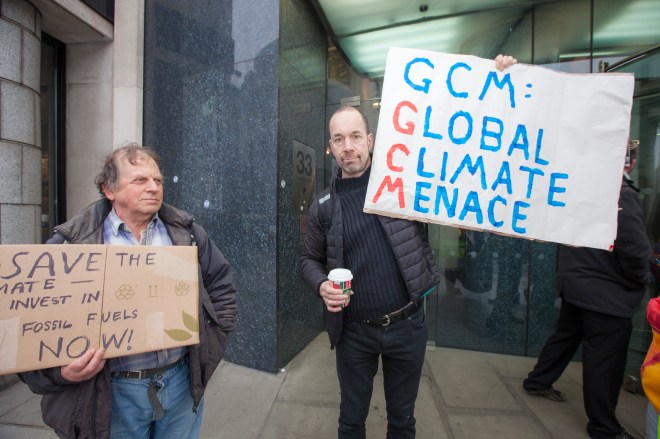
On Friday 28 December in 2018, Bangladeshi protesters and transnational campaigners against the development of coal mines in the Phulbari region of Bangladesh blocked the entrance to the venue of a London based company Global Coal Management  (GCM) Resources’ annual general meeting in central London. Activists disrupted the AGM by occupying the front entrance for four hours from 9am to 1pm on Friday. All major shareholders including GCM’s Head of Corporate Affairs Brian Mooney were blocked out, they waited angrily outside, then gave up and went home.

Activists were particularly angry about GCM Resources’  recent claim that they have signed a memorandum of understanding (MoU) with Power China Ltd. to develop a giant coal mine in Phulbari and their plans to build a 6000 megawatt power plant.

If the mine is built, it would lead to forceddisplacement of up to 230, 000 people over the 36-year life cycle of the project. It will increase poverty, water pollution and will plunder 14,600 hecters of Bangladesh’s most fertile and productive agricultural land in the region, causing a crisis of food production. It will have a devastating impact on the people and the environment.

Watch a short video of the demo outside of the GCM’s AGM:

PRESS RELEASE: London Protesters Disrupted GCM’s AGM

PRESS RELEASE: London Protesters Disrupted GCM’s AGM

  • Activists Blocked the Front Entrance of the AGM for Four Hours

  • Three Arrested as Protesters Glued Themselves to the Entrance of the Venue

  • GCM’s Chairman Michael Tang Failed to Attend the AGM

  • Protesters Successfully Disrupted AGM

London, 28 December 2018

Bangladeshi protesters and transnational campaigners against the development of coal mines in the Phulbari region of Bangladesh blocked the entrance to the venue of the London based company GCM Resources’ annual general meeting in central London. Activists disrupted the AGM by occupying the front entrance for four hours from 9am to 1pm on Friday, 28 December. All major shareholders including GCM’s Head of Corporate Affairs Brian Mooney were blocked out, they waited angrily outside, then gave up and went home.

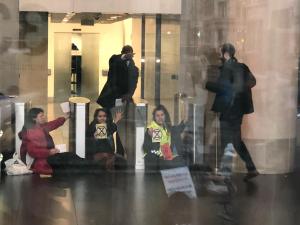
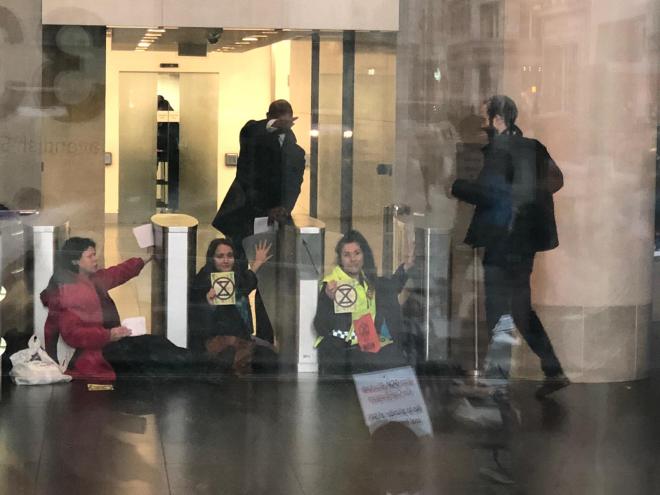
Three “Friends of Phulbari Solidarity” blocked the foyer of 33 Cavendish Square at 9am on Friday, 28 December 2018. Photocredit: Samarendra Das.

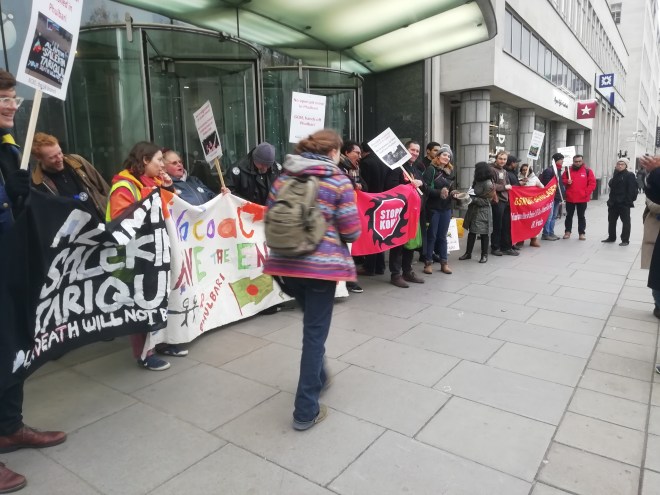
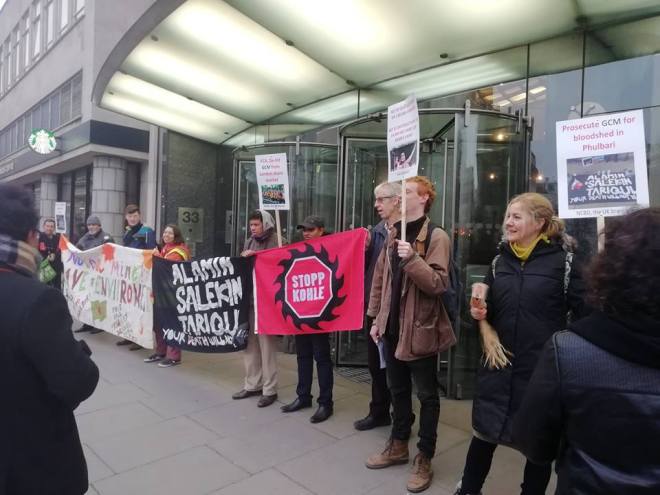
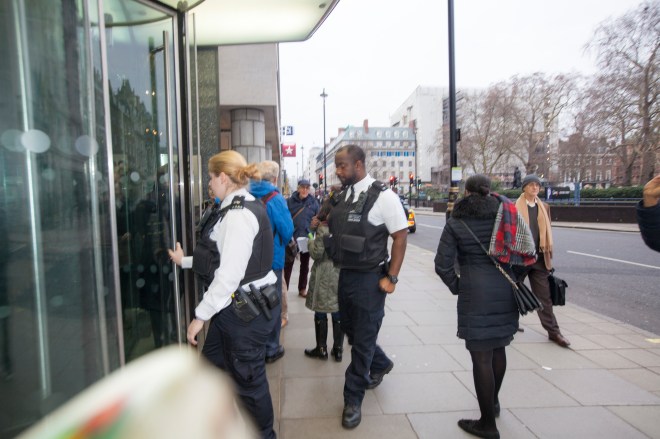
Three activists superglued themselves to the entrance turnstiles of the lavish building of 33 Cavendish Square where GCM had planned to hold their AGM. The activists self-identified as “Friends of Phulbari Solidarity” refused to move until specialist police used solvents to detach them, then make arrests. Outside the building 30 more obstructed the entrance holding banners, chanting slogans and singing Christmas carols against the bullying coal mining company.

If the mine is built, it would lead to forceddisplacement of up to 230, 000 people over the 36-year life cycle of the project. It will increase poverty, water pollution and will plunder 14,660 hecters of Bangladesh’s most fertile and productive agricultural land in the region, causing a crisis of food production. It will have a devastating impact on the people and the environment. In return Bangladesh government would gain nothing but economic exploitation, said Rumana Hashem, the Coordinator of Phulbari Solidarity Group.

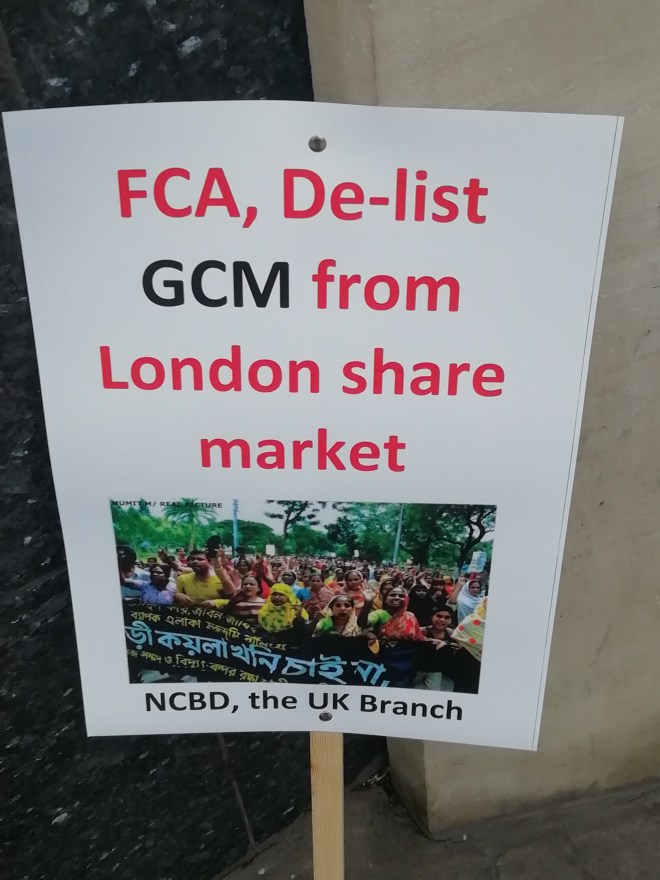
A placard displayed outside 33 Cavendish Square by the Bangladesh National Committee’s UK branch asked the Financial Conduct Authority of London Stock Exchange to de-list GCM.  On Friday, 28 December 2018. Photocredit and Copyright: Golam Rabbani, Phulbari Solidarity Group.

Noisy and jolly protesters sang Christmas jingles “Phulbari says NO! GCM must GO! We won’t let you trade in England. Or pollute Bangladesh”! Friday, 28 December 2018. Photocredit: Paul Dudman, Phulbari Solidarity

Construction of the plant is dependent on approval from the Bangladeshi government who previously shelved plans for the development following massive protests in 2006. The 80,000 people’s peaceful and powerful march was attacked by paramilitary forces resulting in the deaths of three protesters and injured 220 more. Abuse by the UK company was furthered by the recent arbitrary cases against community leaders by GCM’s CEO. Gary Lye, the CEO of the company, filed multiple arbitrary cases against 26 frontline local leaders for opposing the proposed coal mine in 2016.

Friday’s colourful and vibrant protest addressed these issues and more. On November 27, 2018 GCM Resources claimed to have signed a memorandum of understanding (MoU) with Power China to develop a giant coal mine in Phulbari and to build a 6000 MW power plant. This news has made protesters angry.

Rumana Hashem of Phulbari Solidarity Group reads out a petition by 134 community leaders from Phulbari. Friday, 28 December 2018, 33 Cavendish Square, London. Photocredit: Paul Dudman.

An eye witness to the Phulbari shooting and the spokesperson of the Phulbari Solidarity Group, Rumana Hashem has conveyed a petition signed by 134 community leaders from Phulbari challenging GCM’s so called MoU with China Power. Dissident shareholders were to hand in the petition to GCM’s chairman Michael Tang. But Tang was not in attendance. Activists say that Tang was worried about the protest.

The protest was co-organised by the Phulbari Solidarity GroupReclaim the Power and the Committee to Protect Resources of Bangladesh – UK branch of the Bangladesh National Committee. They were joined by Foil Vedanta, London Mining Network, Extinction Rebellion, Cambridge Zero Carbon Society, Christian Climate Action, 350.org South Asia, and Udichi Shilpi Gosthi, UK.

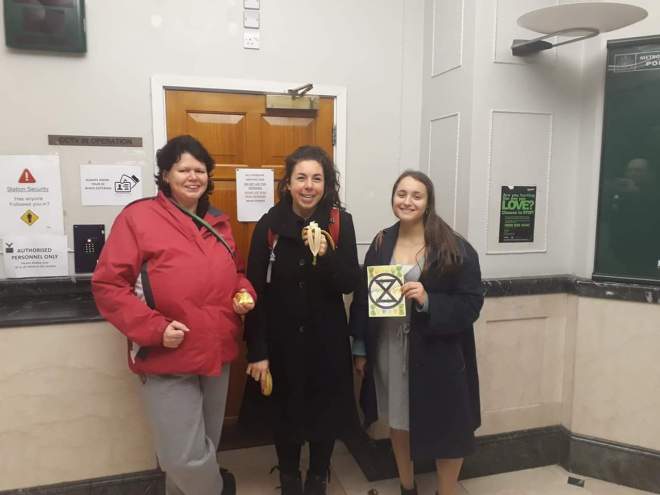
Three “Friends of Phulbari” who successfully blocked out GCM’s shareholders on Friday were released from the Police custody at 3:30am on Saturday, 29 December 2018. Photocredit and Copyright: Ian J Bray, Quaker Peace.

Three arrestees who passionately glued themselves to the entrance were released before 24 hours. They were charged with GBP 4000 for so called criminal damages. But the activists are proud to have joined and supported the Phulbari people. Extinction Rebellion said that they will fight the charges and provide legal supports to defend the activists during trial.

Protesters, jeering “Free Our Friends”, occupied the car park & fire exit of 33 Cavendish Squire. They blocked the exit and stopped the police van for police wrongly arrested three creative protesters. Friday, 28 December, 2018. Photocredit: Land In Curiosity.

Currently Bangladesh produces very little of its electricity from coal and whilst many other countries in the world are looking to transitioning away from coal, the Bangladesh government is planning to massively expand energy production through coal. “ We have published an alternative plan for power generation that demonstrates there is no need to take disastrous path of coal mining and coal power plants to meet power demand in Bangladesh – said Akhter Sobhan Khan Masroor of the Committee to Protect Resources in Bangladesh.

Supporting the protest, Hoda Baraka, Global Communications Director of 350.org stated:

The construction of any new coal power plant is inconceivable given the findings of the IPCC report released in October 2018. Every ton of coal burned makes an immediate contribution to the quantity of CO2 in the atmosphere causing long term and irreversible climate change. We need to keep fossil fuels in the ground now to ensure that we stay below 1,5 degrees in order to avoid catastrophic environmental breakdown.

###

What is the status of the project now?

On November 27, Global Coal Management Resources signed a memorandum of understanding with Power Construction Corporation of China, Ltd (Power China), to develop the coal mine in Phulbari and to build a 4000 MW power plant in Northwest Bangladesh. The company states, “The MOU embodies the principles of a cooperative relationship between the two parties to develop the Company’s proposed coal mine as well as power plants generating up to 4,000 MW at the mine site, and sets out the steps towards a future Joint Development Agreement, obtaining approval from the Government of Bangladesh and subsequent development of both the mine and power plants generating 4000MW.”

GCM wanted to hold their AGM in London on Friday, 28 December 2018, but Bangladesh diaspora along with allies did disrupt the AGM. A powerful, jolly and incredibly noisy protest was held outside the venue and against GCM’s aggressive plans to start mining in Phulbari.

These snapshots are taken from Friday’s protest by PSG BD photographer Golam Rabbani. These are free to use for non-commercial purpose. Please give a credit to the photographer though.

A video of the protest can be accessed here: https://www.youtube.com/watch?v=79IV2TjqRTo&feature=youtu.be

For more photos and video foootage, feel free to contact: Golam Rabbani @rabbani.enpolicy@gmail.com

An online report of GCM’s AGM is available on London Mining Network’s website:  http://londonminingnetwork.org/2018/12/the-sound-and-the-fury-yet-another-gcm-agm/


Further reports can be accessed from below:

Morning Star – Environmental activists confront coal-mining executives at shareholders’ meeting in London https://morningstaronline.co.uk/article/environmental-activists-confront-coal-mining-executives-at-shareholders%27-meeting-in-london
The Daily Prothom Alo: 29 December 2018.

Asia Energy/GCM Must Stop Unethical Business In London Stock Exchange

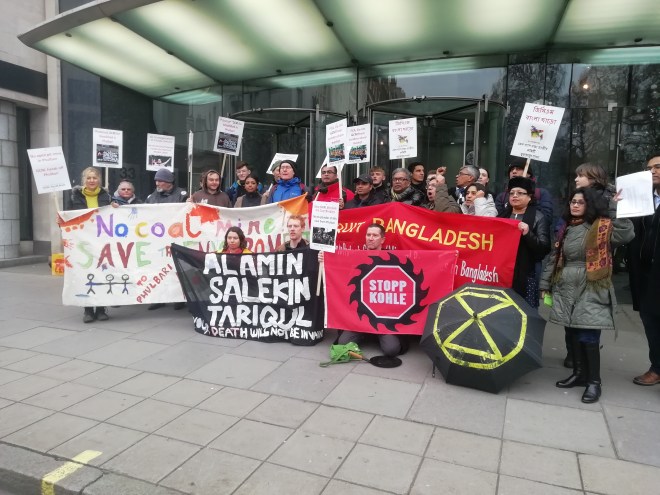
In support of Phulbari communities, a noise demo and blockade was held outside GCM’s AGM at 33 Cavendish Square in London on Friday 28 December 2018. Copyright: Golam Rabbani/PSG.

Phulbari Verdict Must Be Fully Implemented

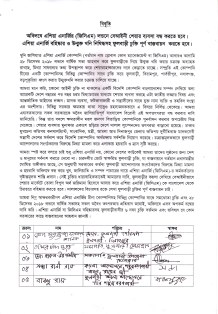
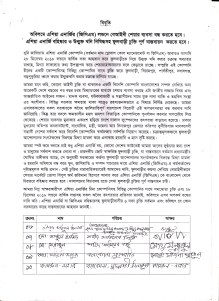
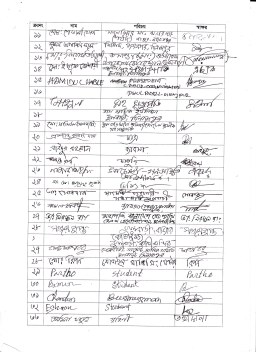
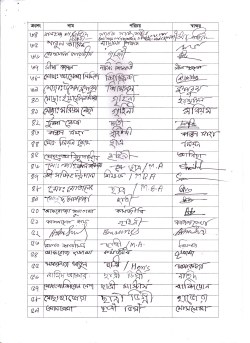
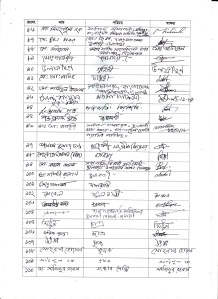
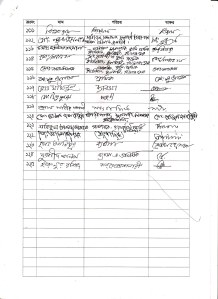
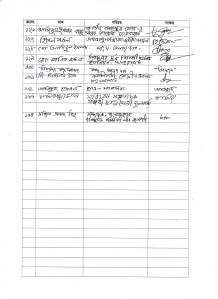
The below statement was signed by 134 community leaders from 50 communities around Phulbari, objecting to GCM’s proposed open cast coal mine. It was meant to be presented by dissident shareholders to GCM’s board of Directors at the AGM. The original letter from the community was  written in Bangla. PSG has translated the statement in English language for greater readership.

“The killer and corrupt extractive company, Asia Energy, thereafter Global Coal Management Resources  (GCM) , hold their AGM to bluff shareholders and to sketch out vicious plans for further human rights violation and to destroy livelihood  in Phulbari and northwest Bangladesh. The company has recently signed a Memorandum of Understanding with a Chinese company and is trying to reach new agreements with various other companies to develop a giant open cast coal mine in Bangladesh to destroy Phulbari, Birampur, Parbotipur, Nobabganj and Boropukuria chapters.

Despite ban of Phulbari project, the company is selling shares in London Stock Exchange. This is outrageous. GCM’s do not have any business in Phulbari. They do not have license to undertake business in Bangladesh. That a company is selling fake shares in the name of Bangladesh’s Phulbari project abroad is an embarrassment for the nation. We see this is a humiliation for all of us. Such act should be legally challenged in international court.

We are aware that GCM’s directors continue to lobby Bangladesh’s corrupt ministers, politicians and elite businessmen. The company continues to harass local people and indigenous farmers. GCM has filed utterly false and multiple cases against 26 community organisers and frontline activists in the region.  Now they are selling shares in the name of Phulbari in other countries. Bangladesh government should denounce this utterly unethical act of GCM. Government must not allow this company to re-enter the region.

The Phulbari Verdict 2006 was written with our blood. We will never let GCM or any other company to enter Phulbari ever. We say loud and clearly that the construction of the coal mine in the region will never be possible. Not in our region. Not in our lifetime.

We call upon the government that this company be banned for ever.  We express our total disapproval of and outrage to GCM’s ongoing unethical and corrupt activities. We demand full implementation of the 6-points demand of the Phulbari Verdict.

We the undersigned,

Amar Chand Gupta, Bablu Rai,  Muahmmad Murtaja Sarkar Manik,

Sondhya Rani Rai, and 130 more community representatives.”


The above statement is translated by Rumana Hashem. The scanned copy of the original Bangla version of the community statement and the list of signatures are attached.


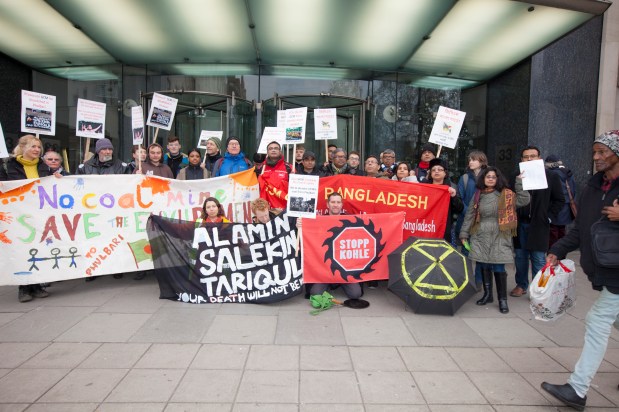
A protest outside GCM’s AGM held on Friday 28 December 2018 in central London. Copyright: Golam Rabbani

Stop GCM, Blockade the Coal Burglars!

Defend the Homes, Land, Livelihood and Environment

Protest at GCM’s AGM in London


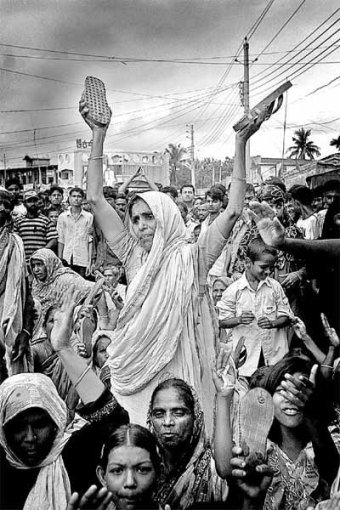
Non-violent protest by affected communities and women’s resistance in August 2006

Global Coal Management Resources Plc. is a London-based AIM-listed extractive company that wants to build a massive open-pit coal mine by forcibly displacing 130,000 families of farmers in Phulbari. The company, previously known as Asia Energy, has been hotly resisted by locals for its fatal business policy. Three people were shot dead and two hundred injured when paramilitary force opened fire in a demonstration of 80,000 people that took place in opposition to plans by GCM in 2006 in Phulbari.


GCM do not hold a valid contract with Bangladesh, but they are selling shares in London Stock Exchange in the name of Phulbari coal project. They are aggressively moving ahead to build the coal mine. If the mine is built, it would destroy 14,600 hectares of highly cultivable land in northwest Bangladesh. It would pose threats to clean water resources for as many as 220,000 people, and would leave devastative impact on one of the world’s largest mangrove forests and UNESCO heritage site, the Sundarbans.

In return Bangladesh govt would gain nothing but economic exploitation. According to the proposed deal, GCM would extract coal for 30 years, while government of Bangladesh would get 6 percent royalty and the company would own and export 94 percent of the extracted coal. Moreover, the company would enjoy 9 years tax holidays and after 30 years they would own all of whatever coal would be remaining in the Phulbari coal-bed reserve. This is unacceptable!

GCM has recently reached a so called memorandum of understanding with Power Construction Corporation of China, Ltd. to implement the project. GCM’s CEO, Gary Lye, has been systematically abusing local opponents of the project. Lye has filed multiple arbitrary cases against 26 frontline local leaders against mining. GCM will hold their AGM in London on 28 December during the month of the climate summit #COP24. We must stop them. Blockade the coal burglars, GCM!

JOIN Us Inside and Outside the AGM!

Please confirm your participation via Facebook: https://www.facebook.com/events/376498479785077/

Protest Outside AGM

When? 9:30am-1pm, Friday 28 December

Where? 33 Cavendish Square, London W1G 0PW.

The protest will be loud, colourful and noisy. Feel free to bring along your organisational banners and any noisy instrument, and lots of friends to make noise:))

Proxy Inside AGM

When? 10am, Friday 28 December

Where? 33 Cavendish Square, London W1G 0PW.

Dissident shareholders will represent the communities inside the AGM. If you would like to join the delegation, please do get in touch with us. Please RSVP via email to: aktersk@gmail.com (Dr Akhter Sobhan Masroor) by Friday 14 December 2018.

Phulbari Solidarity Protest outside GCM’s AGM in December 2016. Photocredit: Golam Rabbani.


For further information contact: nationalcommittee.uk@gmail.com , phulbarisolidaritygroup@gmail.comTel: 07714288221, 07861686036.

Committee to Protect Resources of Bangladesh, UK branch http://www.protectbdresources.org.uk

Phulbari Solidarity Group www.phulbarisolidaritygroup.org

Reclaim The Power https://reclaimthepower.org.uk/

Climate Change Dissenters Blocked Five London Bridges

Phulbari Solidarity Stands in Solidarity with Extinction Rebellion

By Paul Dudman


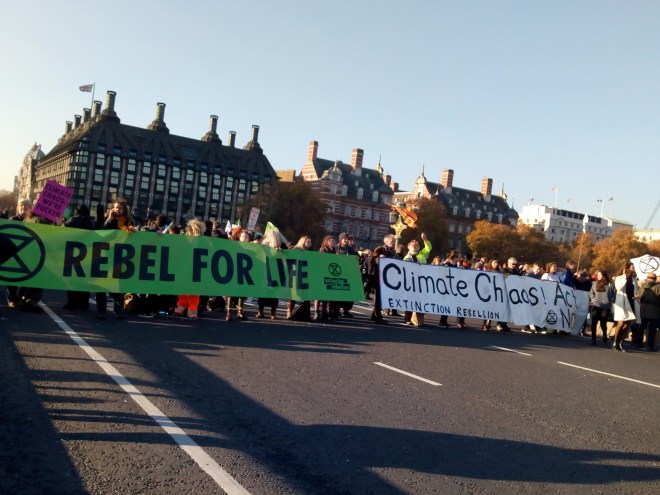
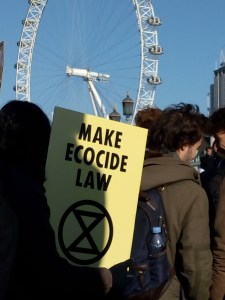
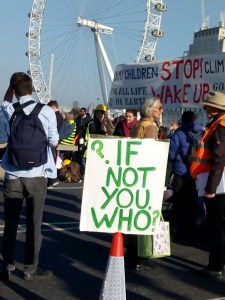
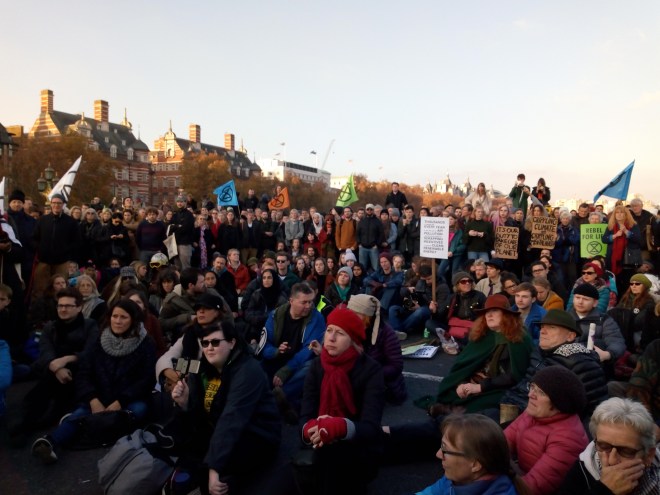
Westminster Bridge blocked by Extinction Rebellion on 17 November 2018. Photocredit: Rumana Hashem

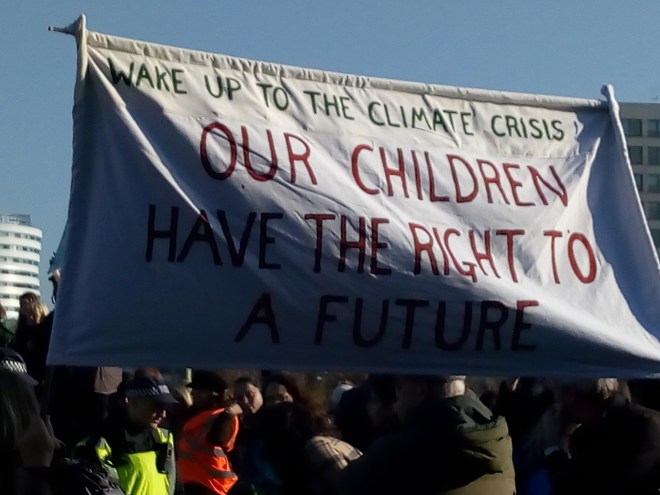
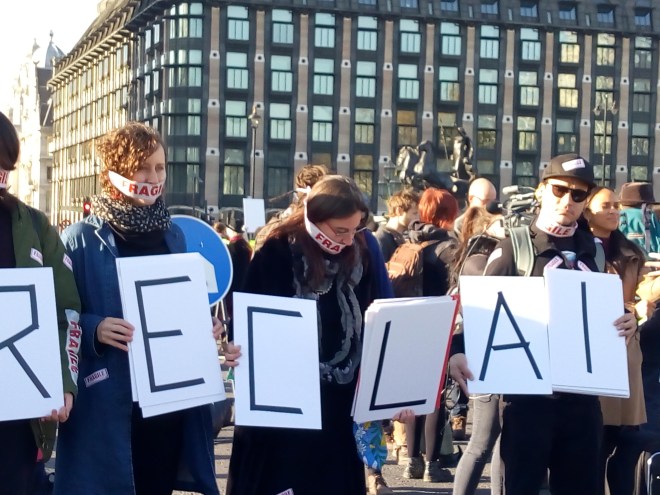
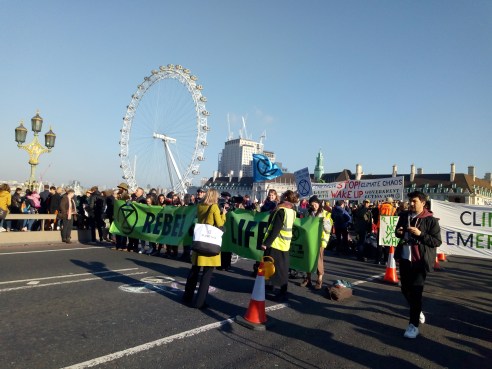
Yesterday we have witnessed an extra-ordinary Rebellion Day in London where climate change dissenters closed down iconic bridges in the city. Despite arrests and police barricades, five bridges in central London were closed down by concerned, disobedient and non-violent civilians, who gathered in the city under the banner of Extinction Rebellion, a platform committed to “Fight For Life”.


Blocked Westminster Bridge on 17 November 2018. Photocredit: Rumana Hashem

From the morning 10am through late afternoon 5pm on the Rebellion Day more than 6,000 people have occupied five bridges in central London “to raise the alarm on the climate and ecological crisis – and to put pressure on the Government to come clean on the fact that there is a climate emergency”. A press release by the Extinction Rebellion notes “This is the first time in living memory that a protest group has intentionally and deliberately blocked the five iconic bridges of central London”. The blocked bridges include Southwark, Blackfriars, Waterloo, Westminster and Lambeth. Police have put signal blockers in place to prevent live streaming. There have been 22 confirmed arrests of protestors. People have willingly put themselves at risk of arrest and imprisonment to ensure that this cause is brought to the public’s attention.


Rebellion Day witness at Westminster Bridge on 17 November 2018. Photocredit: Rumana Hashem

We were there in Westminster Bridge with full support from the Bangladesh National Committee and Phulbari Solidarity Group to the rebels. At the end of the blockade an Extinction Assembly was held featuring six voices from six nations from the global South affected by climate breakdown.


The voices include Raki Ap of Free West Papua Campaign, Rumana Hashem of Phulbari Solidarity Group- Bangladesh, Mawukofi Klu of Pan-Afrikan Reparations Coalition in Europe, and representatives from Ecuador, India, Kenya, Ghana and Mongolia.


The Phulbari Solidarity Group declared solidarity with the Extinction Rebellion on the Rebellion Day. Rumana Hashem, the founder of the Phulbari Solidarity, who attended the Assembly at the Westminster Bridge, said that: the ongoing civil disobedience to decarbonise our lifestyle and to protect our planet from criminal extractive companies and governments was long- overdue. Rumana gave her witness to the climate crime committed by a London-based mining company in Bangladesh.


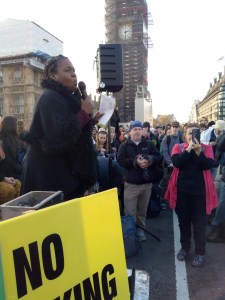
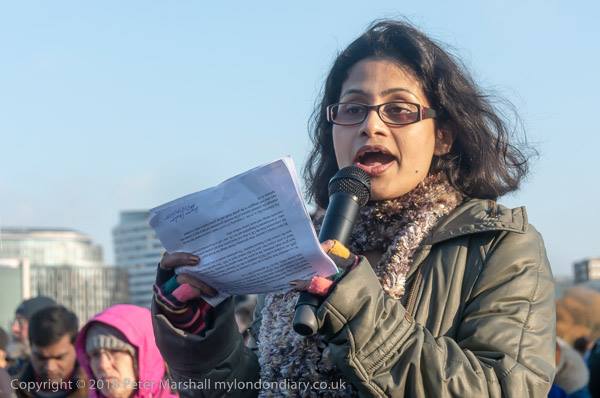
Rebellion Day witness by Rumana Hashem in Westminster Bridge on 17 Nov 2018. Photocredit: Peter Marshall

She stated by addressing a passionate crowd that:

I’m bearing witness to the killings of three people and the destruction of green land, rivers and homes of thousands of peaceful people in Bangladesh, perpetrated by a British mining company for 12 years. An AIM-listed London-based multinational company, Global Coal Resources Management plans to build a massive open-cast coal mine in northwest Bangladesh, in Phulbari. Original research by independent researchers shows that if the mine is built at least 130, 000 people would be immediately displaced, polluting water sources of as many as 220,000 people. It will destroy over 14,000 hecters of land in the country’s most fertile agricultural region, where most people have land-based livelihoods. It would contribute to catastrophic climate change by supplying coal burning power stations. It would threaten the Sundarbans – one of the world’s largest remaining mangrove forests and a UNESCO World Heritage site.


In return Bangladesh govt would gain nothing but economic exploitation. According to the proposed deal, the British company would extract coal for 30 years, govt of Bangladesh would get 6 percent royalty and the company would own 94 percent of the extracted coal. Moreover, the company would enjoy a 9 years tax holiday and after 30 years the company would own all of whatever coal would be remaining in the Phulbari coal-bed reserve.


The company, previously known as Asia Energy, has been hotly resisted by locals for its fatal business policy. On 26 August in 2006, over 80,000 farmers marched in Phulbari where three people were shot dead and over 200 injured when paramilitary troops fired on a massive demonstration. I was present there. I have witnessed the bloodshed; I saw people’s stomach coming out right on the street. So we’ve blocked roads, bridges, and railway in the region. All entries to the region were closed down for a week. Following on the shooting, Bangladesh government has cancelled all contracts with Global Coal Management. We’ve put a halt to the project.


Westminster Bridge on 17 November 2018. Photocredit: Rumana Hashem

This shows that civil disobedience works. It is required in historically specific context. When government fails, we need to take control in our hands. We need to act to save our lives and our planet. We would not occupy bridges and roads for ever though. We ought to take control of our streets at times to make the governments take steps to prevent crimes.


In Bangladesh, we said, “No fracking, invest to save the planet”. But that is not enough. The London-based company is still aggressively moving on to get a new deal with the government. They continue to breach law. They have been harassing indigenous people. 26 frontline activists have been faced with multiple arbitrary cases filed by the company in 2016. We asked the UK government and political leaders to use their influence to stop the Global Coal Management, and to act immediately to prevent climate crimes. But the UK government failed to act.


We’ve submitted three reports to the Joint Committee for Human Rights Enquiry into Human Rights and Business in 2009.  We’ve placed a joint OECD complaint to the UK National Contact Point in 2013, and I have given many witnesses. But no action was taken against the company. The Parliament failed to print the witness statement that I gave for their annual report in 2009. They said that they couldn’t print the witness due to financial hardship. The parliament wanted to save printing cost. Instead of publishing my report, the Joint Committee has published a response from the Global Coal Management in their annual report in 2009!


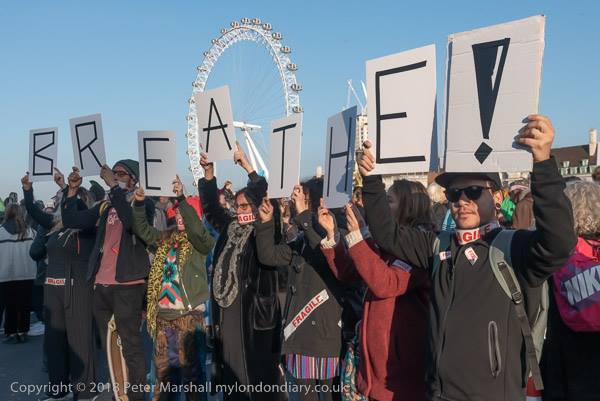
Rebels on Rebellion Day on 17 Nov 2018. Photocredit: Peter Marshall

Rumana also said that Bangladesh is at the frontline of climate change. We have reached a juncture when preventing climate change has become urgent. We want a fair commitment from the UK to stop coal based power plants and corporate grabbing in the name of development in Bangladesh and the UK. We call on the government for ensuring renewable energy and social justice without delay.


She concluded by saying:

This Rebellion Day is, to me, a beginning of a much needed social movement that not only challenges the criminal inaction of the ecocidal governments but also a way to connect with each other over struggles in the global South and the global North to make our planet habitable for all. I stand in solidarity with the Extinction Rebellion on this Rebellion Day.


The crowd expressed solidarity with the struggles in Bangladesh and other countries including Ecuador, Ghana, India, Kenya, Mongolia where British mining companies undertake projects violating human rights and causing climate change.


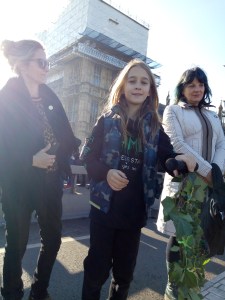
Solidarity in blocked Westminster Bridge on 17 November 2018. Photocredit: Rumana Hashem

The Rebellion Day has ended by a treeplanting ceremony in the Parliament Square, with more than 3K Extinction Rebellion protestors present. The rebels planted three trees in the centre – plum, apple and evergreen – while singing a sufi song called “Always in Love”.

The Extinction Rebellion was launched on 31st October and has fast grown.  Its branches have spread across 28 countries while London remains the centre of the rebels. Supports to Extinction Rebellion are rapidly growing. The Extinction Rebellion demands that:


  1.  The Government must tell the truth about the climate and wider ecological emergency, reverse inconsistent policies and work alongside the media to communicate with citizens.
  2. The Government must enact legally binding policy measures to reduce carbon emissions to net zero by 2025 and to reduce consumption levels.
  3. A national Citizen’s Assembly to oversee the changes, as part of creating a democracy fit for purpose.

Blockade on Rebellion Day in Westminster Bridge on 17 Nov 2018 Photocredit: Rumana Hashem

Read the Extinction Rebellion Declaration here: https://rebellion.earth/declaration/

Please visit the Rebellion Day Facebook page for further information and news about the blockades: https://www.facebook.com/events/1758991460816073/ 

For Photos/videos visit: https://drive.google.com/drive/u/0/folders/1m1v7Cs8JFkDM1gHp45OF-NwwhLzPZJO8

Also pictures by Peter Marshall are available for editorial use from Alamy. Westminster Bridge pictures at https://www.alamy.com/news/newsresults.aspx…


Credits for most photos used in this report belongs to Rumana Hashem, except for those indicated by Peter Marshall. The photos are free to use but please acknowledge the photocredit, thanks.

Vibrant Rally held in London on Global Day of Solidarity to Save the Sundarbans from Coal

By Rumana Hashem

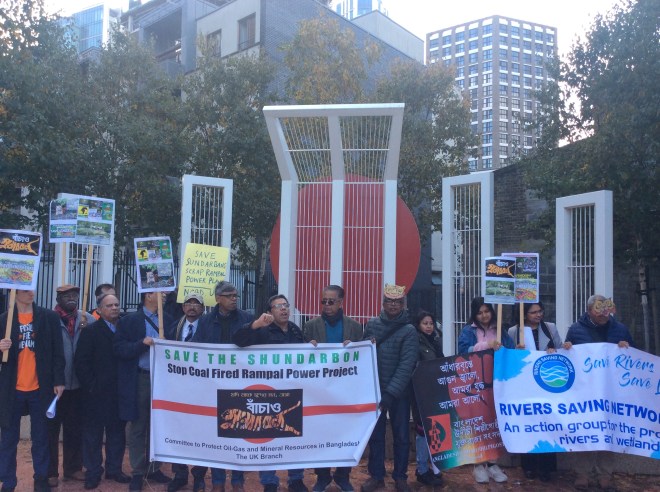
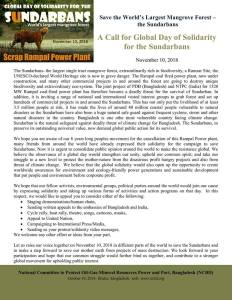
On Saturday, the 10th November, London saw a vibrant rally by London’s climate activists at Altab Ali Park on the Global Day of Solidarity to Save the Sundarbans. In response to the National Committee to Protect Oil Gas and Mineral Resources in Bangladesh (NCBD)’s call to observe a worldwide solidarity to save the world’s largest mangrove forest, the UK branch of NCBD has organised a powerful rally which was joined by grassroots and community climate organisations. Speakers attending the rally called on Bangladesh and Indian governments to scrap Rampal coal-power plant urgently and to halt climate change in Bangladesh and across South Asia.

Altabl Ali Park rally in London on Global Day of Solidarity to Save the Sundarbans from Coal, 10 Nov 18. Courteasy: NCBDUK.


Presided by a veteran Bangladeshi community leader and medical professional Dr Rafikul Hasan Jinnah and moderated by the general secretary of the UK branch of NCBD, Akhter Sobhan Masroor, the rally was outraged about the joint project of the Power Development Board (PDB) of Bangladesh and National Thermal Power Corporation (NTPC) of India for 1320 Megawatt Rampal coal-fired plant because it is a deadly threat to the environment and livelihood of the Sundarbans. If built the Rampal power station in Bangladesh will spew 8 million tonnes of Co2 emissions into the atmosphere contributing to rising temperatures and irreversible climate change. This isn’t compatible with the scientific mandate to keep global heating under 1.5˚C.

Speakers expressed solidarity with the NCBD in their call to all political parties in Bangladesh to include forestry reservation, especially the Sundarbans, and environmental protection in their manifesto for the 11th national polls. Activists also demanded that the government stop all processes for industrialisation near the Sundarbans prior to declaring the schedule of the general election. The general secretary of the UK branch of NCBD, Akhter Sobhan Masroor, said that alongside the destructive coal-based Rampal power plant, a group of forest and land-grabbers have developed more than 300 commercial projects near the Sundarbans.

The rally was joined by East London’s leading local climate organisations such as Fossil Free Newham, the River Savings Network, the Water Keepers, the Extinction Rebellion, the Unite Community and Labour Party Women’s Forum in Tower Hamlets, the Bangladesh Socialist Party, the Communist Party of Bangladesh, the Liberty Arts, and of course Phlulbari Solidarity, UK. The London rally took place as part of  the global human chains and public meetings held in Bangladesh, Canada, France, Germany and across the world demanding immediate halt to the Rampal coal-plant in October and November.


The Sundarbans is the world’s largest mangrove forest and is located in Bangladesh – one of the world’s most vulnerable areas to climate change impacts. Despite grave concern raised by the experts and people, the government in Bangladesh is going ahead to implement an Indo-Bangla 1300 MW coal fired Rampal power plant close to the forest which speakers at the Altabl Ali Park rally branded as “clearly issued its death warrant”. In addition, it is inviting a range of national and international vested interest groups to grab forest and has set up hundreds of commercial projects in and around the Sundarbans.

This has not only put the livelihoods of at least 3.5 million people at risk, it has made the lives of around 40 million coastal people vulnerable to natural disasters. The Sundarbans have long since been a natural safe-guard against frequent cyclones, storms and other natural disasters in the country. Sundarbans provides a natural barrier against Bangladesh’s deadly climate change threat. In order to preserve its outstanding universal value and to protect the world’s largest mangrove forest, Saturday the 10th November has been observed worldwide as a global day of solidarity to save the Sundarbans.


For further background news, please read:

Global Protests on Saturday to Save the Sunderbans from coal, 350.org news, 09 November 2018.

A call for Global Day of Solidarity for the Sundarbans, Fossil Free Newham, 6 November 2018.

Stop industrialisation in Sundarbans before election schedule, Environmentalists urge govt. The Daily Star, 07 October 2018.

Make poll pledge to scrap hazardous power plants. The New Age, 07 October 2018.